

Introduction
Arthritis is a common condition among seniors, often causing joint pain, stiffness, and reduced range of motion. Simple household chores can become difficult, especially tasks that require repetitive movements or lifting heavy objects. Vacuuming is one of those tasks that can quickly lead to discomfort if the right equipment is not used.
Understanding how to choose a lightweight vacuum for seniors with arthritis can make a significant difference in daily life. A properly selected vacuum allows seniors to clean their homes without excessive strain, helping them stay independent and comfortable. The right choice can also reduce the risk of falls, fatigue, and joint flare-ups.
This guide is based on detailed research and user-focused insights. It is designed to help seniors, caregivers, and family members choose a vacuum that prioritizes ease of use, ergonomic comfort, and long-term safety.
Understanding Arthritis and Its Impact on Daily Cleaning
Arthritis affects the joints, often leading to pain, swelling, stiffness, and reduced strength. These symptoms can vary in severity but commonly worsen with repetitive motion or heavy lifting.
When vacuuming, arthritis can cause:
- Pain in wrists and fingers from gripping handles
- Shoulder strain from pushing heavy machines
- Knee and hip discomfort from bending or lifting
- Fatigue from prolonged physical effort
Because of these challenges, seniors need cleaning tools that minimize physical stress rather than add to it.
Why Lightweight Vacuums Are Ideal for Seniors with Arthritis
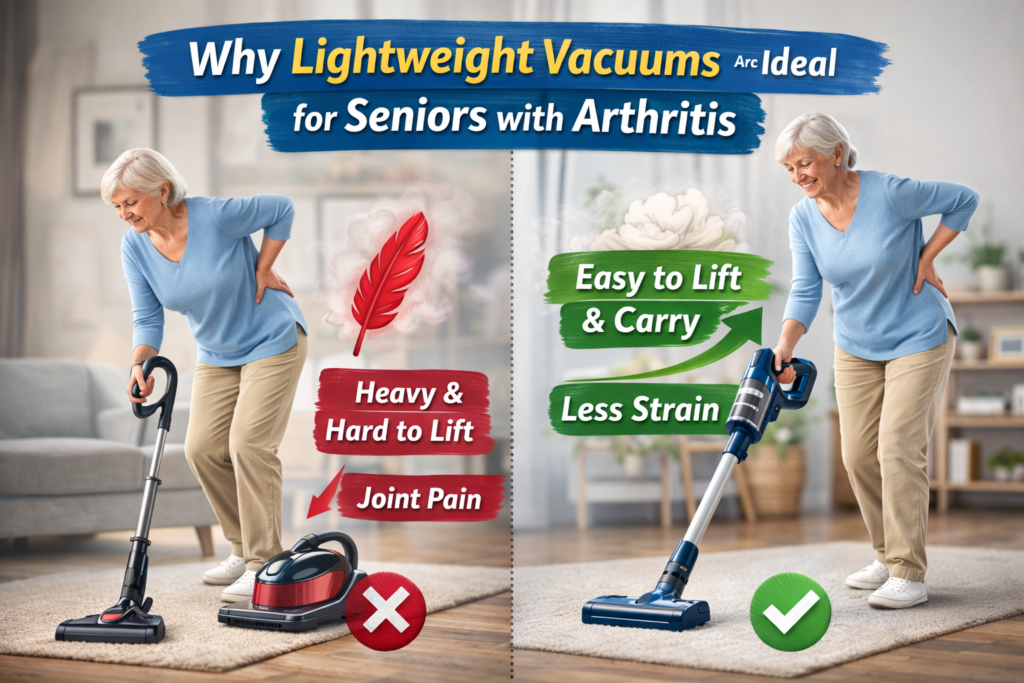
Lightweight vacuums are designed to reduce the physical effort required during cleaning. For seniors with arthritis, this difference is especially important.
Key benefits include:
- Easier lifting and carrying
- Less force needed to push or pull
- Reduced strain on joints
- Improved balance and safety
- More comfortable cleaning sessions
A lightweight vacuum allows seniors to clean at their own pace without pain or frustration.
What Is Considered a Lightweight Vacuum?
The term “lightweight” can be misleading, as manufacturers may use it loosely.
General weight guidelines:
- Under 10 pounds: Excellent for seniors with arthritis
- 10–15 pounds: Acceptable if ergonomically designed
- Over 15 pounds: Often difficult to manage
Weight alone is not enough; balance and design also matter. A well-balanced vacuum may feel lighter than its actual weight.
Ergonomic Design: A Critical Factor
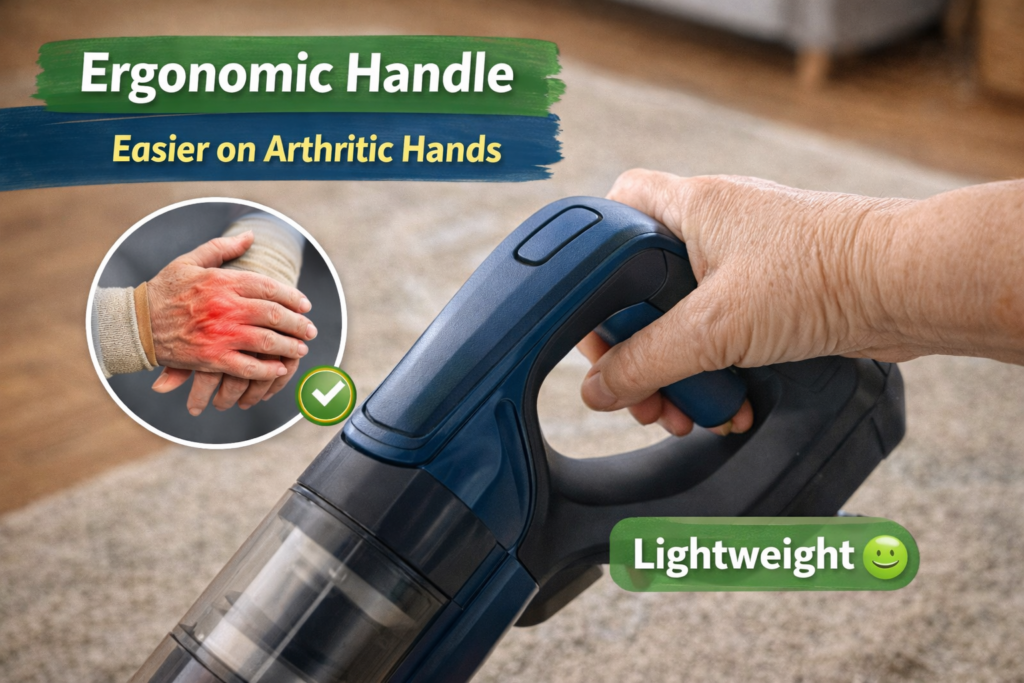
Ergonomics refers to how well a product fits the human body and its movements.
Handle Design
For arthritis-friendly use, handles should:
- Have a soft or padded grip
- Be shaped to reduce wrist bending
- Allow a relaxed grip without squeezing
Poor handle design can increase joint pain even in lightweight models.
Overall Balance and Posture
A vacuum should:
- Feel stable during use
- Not tip easily
- Allow upright posture while cleaning
Good balance reduces the need for constant corrections, which can strain joints.
Ease of Movement and Maneuverability
Pushing a vacuum should feel smooth, not forced.
Important features to consider:
- Swivel steering for easy turning
- Smooth wheels that glide across floors
- Lightweight heads that move effortlessly
A vacuum that moves easily reduces shoulder and arm strain.
Control Buttons and Ease of Operation
Small or stiff buttons can be painful for arthritic hands.
Look for:
- Large, clearly labeled buttons
- Touch or slide controls
- Minimal settings to avoid confusion
Simple controls are often better than advanced but complex panels.
Cordless vs Corded Vacuums for Seniors
Both options have advantages, but comfort should come first.
Cordless Vacuums
Benefits include:
- No bending to plug or unplug
- No cord dragging resistance
- Easier movement between rooms
They are often more convenient for seniors with limited mobility.
Lightweight Corded Vacuums
These can still work well if:
- The cord is long and flexible
- The vacuum is easy to push
- Storage and handling are simple
The choice depends on personal preference and physical ability.
Dustbin and Maintenance Considerations
Emptying and maintaining a vacuum should not require strength or dexterity.
Arthritis-friendly features:
- One-touch dustbin release
- Lightweight containers
- Minimal twisting or pulling
Simple maintenance encourages regular use without discomfort.
Floor Type and Its Importance
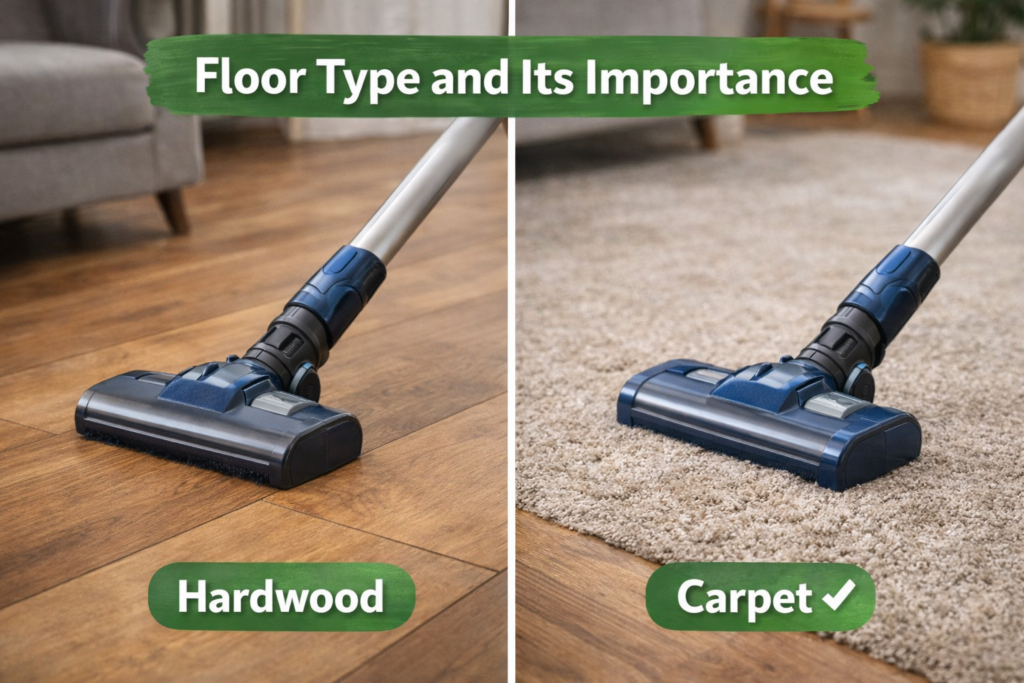
The type of flooring in a home affects how much effort is needed to vacuum.
Hardwood, Tile, and Vinyl Floors
- Require less suction
- Work well with lightweight designs
- Smooth movement reduces strain
Carpets and Rugs
- May require adjustable suction
- Softer brush rolls reduce resistance
- Lightweight upright or stick designs are ideal
Matching the vacuum to the floor type reduces physical effort.
Features Seniors Should Avoid
Not all features are helpful for seniors with arthritis.
Avoid vacuums with:
- Heavy or stiff hoses
- Excessive attachments
- Strong vibrations
- Complicated settings
Simplicity often provides the best experience.
Safety Considerations for Seniors
Safety is just as important as comfort.
A good vacuum should:
- Stand upright securely
- Not require frequent bending
- Be easy to store and retrieve
- Reduce the risk of tripping
Safe design supports confidence during use.
How to Evaluate Comfort Before Choosing
If possible, testing a vacuum can prevent discomfort later.
Ask these questions:
- Can it be lifted easily?
- Does it glide smoothly?
- Are buttons easy to press?
- Is emptying the dustbin simple?
Comfort should always come before performance claims.
Long-Term Use and Arthritis Management
Using the wrong equipment repeatedly can worsen joint pain over time.
Choosing an arthritis-friendly vacuum helps:
- Reduce flare-ups
- Preserve joint health
- Maintain independence
- Make cleaning less stressful
Long-term comfort matters more than short-term convenience.
Tips for Reducing Strain While Vacuuming
Even with the right vacuum, technique matters.
Helpful tips:
- Take breaks during cleaning
- Avoid rushing
- Clean smaller areas at a time
- Maintain good posture
These habits support joint health and comfort.
Frequently Asked Questions (FAQs)
What makes a vacuum suitable for seniors with arthritis?
Lightweight design, ergonomic handles, easy controls, and smooth movement are key factors.
Is lighter always better?
Generally yes, but balance and ease of use are just as important as weight.
Can arthritis pain worsen from using heavy vacuums?
Yes. Repeated strain from heavy or poorly designed equipment can increase joint pain.
Are cordless vacuums easier for seniors?
Often yes, as they eliminate cords and reduce bending and resistance.
Should seniors prioritize comfort over suction power?
Yes. Comfortable, manageable cleaning is more important than maximum power.
Conclusion
Learning how to choose a lightweight vacuum for seniors with arthritis is about more than convenience—it is about comfort, safety, and maintaining independence. The right vacuum minimizes joint strain, reduces fatigue, and makes daily cleaning manageable rather than painful.
By focusing on lightweight design, ergonomic features, simple controls, and easy maneuverability, seniors can select a vacuum that supports their physical needs. A thoughtful choice allows seniors to keep their homes clean while protecting their health and well-being for the long term.