
Table of Contents
Introduction
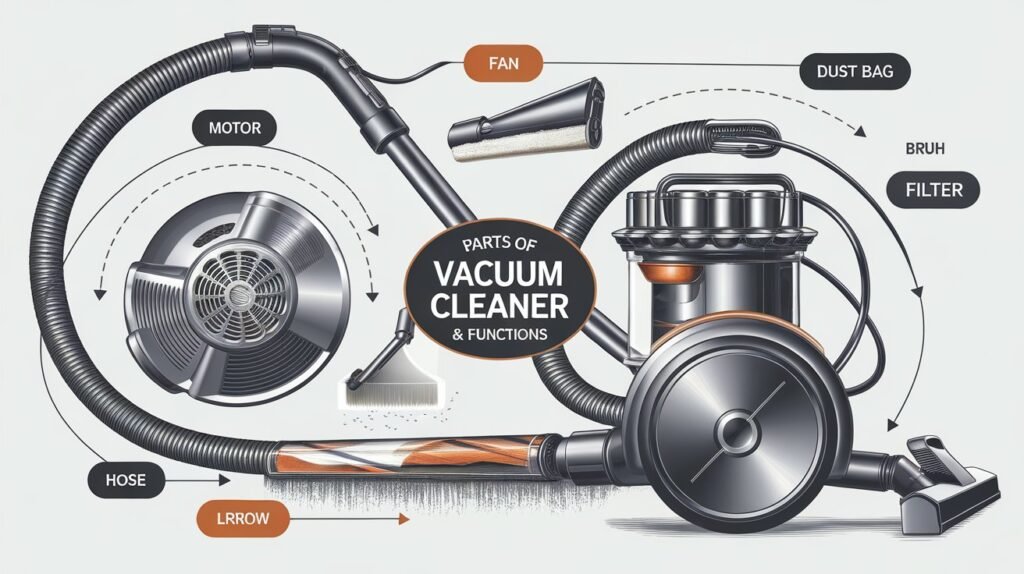
parts of vacuum cleaner and their functions A vacuum cleaner is one of the most useful home appliances for keeping your house clean and dust-free. But have you ever wondered what makes it work so efficiently?
Understanding the parts of a vacuum cleaner and their functions can help you use it better, maintain it properly, and even fix small problems at home. In this complete beginner guide, we will explain all the main components in simple words.
If you are new to vacuum cleaners, you can also check this detailed guide on how they work step by step on our website:
👉 https://vacuumandmop.com/vacuum-cleaner-parts-and-functions/
1. Motor – The Heart of the Vacuum Cleaner
The motor is the most important part of a vacuum cleaner. It powers the entire machine.
Function:
- Creates suction power
- Drives the fan
- Pulls air and dust into the machine
Without a motor, your vacuum cleaner cannot work at all. A powerful motor means stronger suction and better cleaning performance.
2. Fan – Creates Airflow
The fan works together with the motor to create airflow inside the vacuum cleaner.
Function:
- Spins at high speed
- Pushes air forward
- Creates low pressure (vacuum effect)
This airflow is what allows the vacuum cleaner to suck dust, dirt, and debris from floors and carpets.
3. Dust Bag or Dust Container – Stores Dirt
Every vacuum cleaner has a space where all the dust is collected.
Types:
- Dust bag (traditional models)
- Dust container (bagless models)
Function:
- Stores collected dirt and debris
- Prevents dust from going back into the air
If this part is full, your vacuum cleaner may lose suction power.
4. Filter – Cleans the Air
The filter is a very important part, especially for people with allergies.
Function:
- Traps fine dust particles
- Improves air quality
- Prevents dirt from reaching the motor
Some advanced vacuum cleaners use HEPA filters, which can trap very tiny particles like pollen and bacteria.
For more technical understanding, you can read this external guide:
👉 https://www.explainthatstuff.com/vacuumcleaner.html
5. Hose – Air Passage Channel
The hose is the flexible pipe that connects the main unit to the cleaning head.
Function:
- Carries dust and air into the vacuum
- Allows flexible movement
- Helps reach tight spaces
If the hose is blocked, suction will drop significantly.
6. Brush or Nozzle – Cleans Surfaces
The brush (or nozzle) is the part that directly touches the floor.
Function:
- Loosens dirt from surfaces
- Picks up dust from carpets and floors
- Improves cleaning efficiency
Different types of brushes are used for:
- Carpets
- Hard floors
- Pet hair
7. Power Cord or Battery – Supplies Energy
A vacuum cleaner needs power to operate.
Types:
- Corded vacuum (plug into electricity)
- Cordless vacuum (battery-powered)
Function:
- Provides energy to the motor
- Keeps the machine running
Cordless vacuums are more convenient, but corded ones usually offer more power.
How All Parts Work Together
Now that you know the parts, let’s understand how they work together:
- The motor starts running
- The fan creates suction
- Air is pulled through the hose
- Dust is collected in the bag/container
- The filter cleans the air
- Clean air is released back
This process happens in seconds, making cleaning fast and effective.
Common Problems Related to Vacuum Cleaner Parts
Understanding parts also helps in troubleshooting.
🔧 Low Suction
- Cause: Dirty filter or full dust bag
- Solution: Clean or replace them
🔧 Strange Noise
- Cause: Motor or fan issue
- Solution: Check for blockages
🔧 Not Picking Dirt
- Cause: Worn-out brush or clogged hose
- Solution: Clean or replace parts
Maintenance Tips for Long Life
To keep your vacuum cleaner working like new:
- Clean the filter regularly
- Empty the dust container after use
- Check the hose for blockages
- Replace worn-out brushes
- Avoid overloading the machine
You can also explore more maintenance tips here:
👉 https://vacuumandmop.com/
Conclusion
Understanding the parts of a vacuum cleaner and their functions makes it easier to use, maintain, and fix your machine. Each component—from the motor to the brush—plays an important role in cleaning your home efficiently.
By taking proper care of these parts, you can improve performance and extend the life of your vacuum cleaner.
FAQs (Frequently Asked Questions)
1. What are the main parts of a vacuum cleaner?
The main parts include the motor, fan, dust bag/container, filter, hose, and brush.
2. What does a vacuum cleaner motor do?
The motor creates suction power and drives the fan to pull in dust and air.
3. Why is the filter important in a vacuum cleaner?
The filter traps fine dust and improves air quality while protecting the motor.
4. What happens if the dust bag is full?
A full dust bag reduces suction and cleaning efficiency.
5. How often should I clean my vacuum cleaner filter?
You should clean it every 2–4 weeks, depending on usage.
6. Why is my vacuum cleaner losing suction?
Common reasons include a clogged hose, dirty filter, or full dust container.