
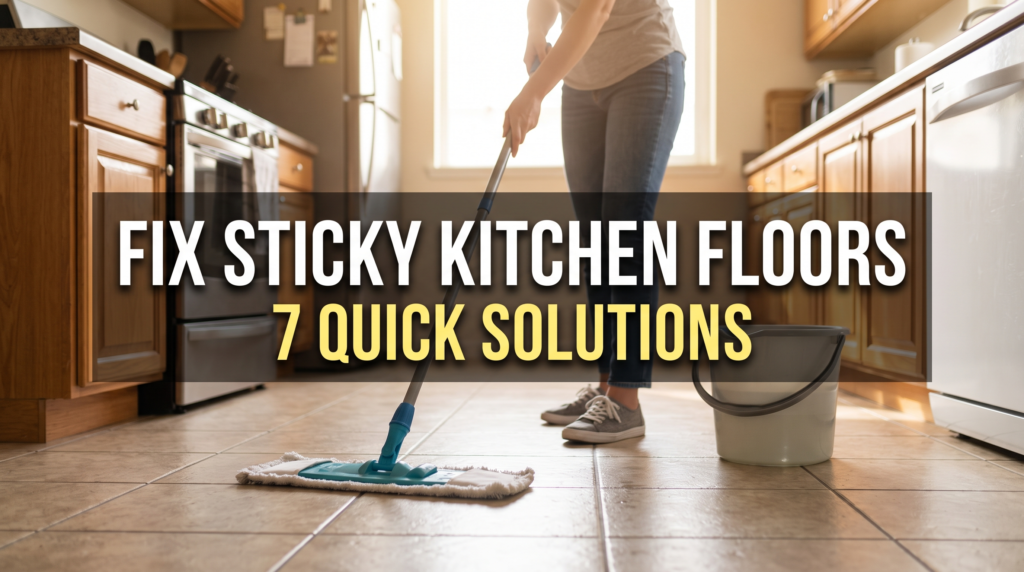
Introduction : Fix Sticky Kitchen Floors
You mop the kitchen, the floor looks clean, and then you walk across it in socks and feel that unmistakable tacky pull with every step. A sticky kitchen floor is one of the most common and most frustrating cleaning complaints, partly because it often happens right after mopping, not before.
The good news is that a sticky floor almost always has a clear, fixable cause. This guide explains why it happens and walks through how to remove the stickiness for good, plus a mopping routine that stops it from coming back. For the right mop for your kitchen, see our mop reviews and buying guides: https://vacuumandmop.com/category/mops/
Table of Contents
Why Kitchen Floors Get Sticky
Kitchens collect a specific mix of grime that other rooms rarely see: cooking grease, spilled drinks, food residue, and splashes from counters and the stove. Several things turn this into a lasting sticky film.
- Grease residue. Cooking oil and splatters bind to the floor and are not removed by water alone.
- Sugary spills. Juice, soda and other sweet spills leave a tacky film once the liquid evaporates, even if the floor looked clean right after wiping.
- Too much cleaning product. This is the most common and most overlooked cause. Extra soap does not rinse away completely and dries into a sticky layer.
- Reused dirty mop water. Mopping the whole kitchen with one bucket of water just spreads grease and residue around instead of lifting it.
- Skipping a rinse step. Many people mop once with a cleaner and stop, without ever rinsing the floor with plain water afterward.
In most cases, a sticky floor after mopping is actually a sign of too much cleaner, not too little. This lines up with what cleaning professionals report, too. Industry experts interviewed by Tom’s Guide (https://www.tomsguide.com/home/why-are-my-floors-still-dirty-after-mopping-we-ask-the-cleaning-experts) point to using the wrong amount of cleaning solution, and mopping with a dirty or poorly maintained mop head, as two of the most common reasons floors look dirty or feel sticky even right after mopping.
For months I dealt with a tacky kitchen floor and kept assuming I just needed a stronger cleaner, so I kept adding more soap to the bucket. It actually got worse. A neighbor who used to clean offices mentioned almost in passing that I probably needed to rinse after cleaning, not just mop once and stop. I felt a little silly once I tried it, since one extra pass with plain water completely solved something I had been fighting for ages.
Step-by-Step: Fix Sticky Kitchen Floors
- Step 1: Sweep or vacuum first. Remove loose crumbs, dust and debris. Mopping over this first adds grit into whatever grease is already on the floor.
- Step 2: Mop with a degreasing cleaner. Use a cleaner labeled for grease or kitchen floors, following the dilution instructions exactly. For a natural option, a solution of warm water with a small amount of dish soap, which is designed to cut grease, works well. Avoid adding more than the recommended amount, since this often makes stickiness worse rather than better.
- Step 3: Focus on high-traffic and splash zones. Pay extra attention near the stove, sink, trash can and dining table, since these areas usually carry the most grease and spill residue.
- Step 4: Change your mop water often. Swap to clean water as soon as it looks cloudy or greasy. Continuing to mop with dirty water just redeposits the same residue across the floor.
- Step 5: Do a plain water rinse pass. This step is the one most people skip, and it is often the real fix. After cleaning with your soap or degreaser, mop the entire floor again using only plain warm water. This removes the soap film that causes stickiness.
- Step 6: Dry the floor. Go over the floor with a dry mop pad or towel. A sticky feel is sometimes just a thin layer of moisture mixed with leftover residue, and drying it fully can resolve the problem on its own.
If the Floor Is Still Sticky After Mopping Twice
Sometimes a build-up of old residue needs a slightly stronger approach.
- Mix a stronger degreasing solution, following label instructions for tougher jobs, or use a bit more dish soap than your usual routine.
- Let the solution sit for a few minutes on the floor before mopping, rather than mopping immediately after applying it. This gives it time to break down grease.
- Scrub stubborn spots with a soft bristle brush or scrub pad, focusing on areas near the stove and cabinets.
- Rinse twice with plain water instead of once, to fully remove dissolved grease and soap.
- Dry thoroughly.
If stickiness returns within a day even after this deeper clean, the cause is likely ongoing grease exposure from cooking, which means the floor may need more frequent attention rather than a single bigger clean.
What to Avoid When Cleaning a Sticky Floor
- Oil-based or wax cleaners. These can add to the very residue you are trying to remove.
- Too much cleaning product. More is not more effective, it usually makes stickiness worse.
- Skipping the rinse step. This is the most common reason stickiness comes right back.
- Letting grease sit for long periods. The longer grease stays on a floor, the harder it becomes to remove.
- Abrasive scrubbers on sealed or finished floors. These can dull the surface while trying to fix a stickiness problem that a rinse pass would have solved.
Choosing the Right Mop for a Kitchen
- Flat microfiber mops work well for daily cleaning and are easy to rinse thoroughly between passes.
- Spin mops are useful for kitchens because the built-in wringer makes it easy to change water often, which matters a lot when grease is involved.
- String mops can hold more cleaning solution for tougher grease jobs, but need a thorough rinse afterward since they also hold more residue.
- Steam mops can help cut through grease using heat, though always confirm this is safe for your specific floor type before relying on it regularly.
A well-maintained mop head matters just as much as technique. As the experts quoted by Tom’s Guide note, a mop head that is not cleaned regularly can trap dirt, grease and bacteria, which then get pushed back onto the floor on every pass, undoing the work the cleaner was meant to do.
Whichever mop you use, the key habit is the same: change the water often and always finish with a rinse. Browse mops suited for kitchens and hard floors: https://vacuumandmop.com/category/mops/
A Kitchen Floor Routine That Prevents Stickiness
- Daily: Sweep or do a quick spot wipe near the stove and sink, especially after cooking.
- Weekly: Full mop with a degreasing cleaner, followed by a plain water rinse pass and a dry finish.
- Monthly: A deeper clean with a stronger solution and attention to corners, baseboards and under appliances where grease can build up unnoticed.
- As needed: Wipe up spills, especially sugary drinks, the moment they happen rather than waiting for the next scheduled mop.
Floor-Specific Notes for Kitchens
- Tile: Grout lines in kitchens are especially prone to grease buildup, since the porous surface absorbs residue that a quick mop pass skips over. Give grout extra attention during the weekly clean.
- Vinyl: Generally resists grease well, but still benefits from a rinse pass to avoid a soap film.
- Laminate: Needs minimal water, so use a well-wrung mop and dry quickly, since excess moisture is a bigger concern here than on tile or vinyl.
- Hardwood kitchen floors: Keep water to a minimum, use a cleaner made for your floor’s finish, and dry immediately after mopping to avoid both stickiness and moisture damage.
Common Mistakes to Avoid
- Using more soap to fix a sticky floor. This usually adds to the problem.
- Never rinsing after cleaning. A rinse pass with plain water solves most lingering stickiness.
- Mopping with one bucket of water for the whole kitchen. Change the water as soon as it looks dirty.
- Ignoring grease near the stove. This area needs more frequent attention than the rest of the floor.
- Using wax or polish on a floor that already feels sticky. This adds another layer rather than removing the cause.
Why the Rinse Pass Matters So Much
It is worth repeating because it solves the majority of sticky floor complaints: cleaning products are designed to lift dirt and grease, not to disappear on their own. Once a cleaner has done its job, it needs to be rinsed away, or it dries into exactly the kind of tacky film people are trying to remove in the first place.
This is why a floor can look spotless right after mopping and still feel sticky once it dries. The cleaner did its job on the dirt, but without a rinse, it left its own residue behind. Making the rinse pass a non-negotiable final step, rather than an optional extra, is the single biggest change most people can make to solve recurring stickiness.
Dealing With Specific Sticky Spots
- Under the dining table: Crumbs and dropped food mixed with spilled drinks are extremely common here. A daily quick sweep, plus a slightly more thorough wipe in this zone during the weekly mop, keeps it from becoming a problem area.
- Near the trash can: Drips and splashes collect here more than people expect. Check this spot specifically during your weekly clean rather than relying on a general pass of the room.
- In front of the stove: Grease splatter during cooking lands here more than anywhere else in the kitchen. A quick wipe after cooking, rather than waiting for the weekly mop, prevents buildup.
- Along cabinet edges and baseboards: Residue tends to collect in these narrow areas since mop pads often skip right past them. An occasional pass with a damp cloth catches what the mop misses.
Quick Checklist
- Sweep or vacuum first
- Use the correct amount of degreasing cleaner
- Change mop water often
- Follow with a plain water rinse pass
- Dry the floor completely
- Pay extra attention to the stove and sink area
How to Tell Stickiness From Other Floor Problems
Not every floor complaint is really about stickiness. It helps to tell the difference before choosing a fix.
- Sticky: The floor feels tacky and pulls slightly at socks or bare feet, usually right after mopping or in high grease areas.
- Dull or cloudy: The floor looks hazy rather than feeling sticky. This is more often about product buildup over time than fresh residue, and is usually solved with a plain water pass and a dry finish.
- Gritty: The floor feels like it has sand or crumbs on it rather than a tacky pull. This points to skipping the sweep before mopping, not a cleaner issue at all.
- Slippery: The floor feels slick rather than tacky, which usually points to too much water rather than leftover product.
Matching the right fix to the actual problem saves time, since a sticky floor and a dull floor are solved slightly differently even though they can look similar at first glance.
FAQ
Why is my kitchen floor still sticky after mopping? Usually too much cleaning product left behind, or built-up grease that was not fully rinsed away. A plain water rinse pass after your regular mop often solves it.
What is the best cleaner for a sticky kitchen floor? A degreasing cleaner made for kitchen or hard floors, used at the correct dilution, followed by a plain water rinse.
Does vinegar help with sticky floors? It can help cut through some residue, but if the stickiness is from grease, a dedicated degreasing cleaner is usually more effective.
How often should I mop my kitchen floor? Weekly for most homes, with quick spot cleaning near the stove and sink in between, and more often in busy kitchens.
Why does my floor feel sticky even though it looks clean? A thin film of leftover soap or grease is not always visible but can still feel tacky underfoot. A rinse pass with plain water usually removes it.
Can I prevent stickiness instead of fixing it every week? Yes. Wiping up spills the moment they happen, doing a quick wipe near the stove after cooking, and never skipping the rinse pass during your weekly mop will prevent most stickiness from building up in the first place.
Final Thoughts
A sticky kitchen floor is almost always fixable with the same two steps: use the right amount of degreasing cleaner, and always follow up with a plain water rinse. Build that into your weekly routine and the sticky feeling should not come back. For mops that make rinsing and changing water easy, browse our mops category: https://vacuumandmop.com/category/mops/, or visit the Vacuum and Mop homepage: https://vacuumandmop.com/