

Introduction
Kitchen crumbs are one of the most common daily cleaning problems in any home. Bread crumbs on the counter, rice on the floor, cereal near the dining table — these small messes happen multiple times a day. Using a full-size vacuum or broom every time feels inconvenient, which is why many people consider buying a cheap handheld vacuum. But an important question remains: are cheap handheld vacuums good for kitchen crumbs, or do they end up being a waste of money?
This question is especially relevant for beginners, renters, and people looking for quick, simple cleaning solutions. Cheap handheld vacuums promise portability, ease of use, and fast cleanup, but their real-world performance can vary. Understanding what they can and cannot do helps you make smarter cleaning decisions without unrealistic expectations.
This guide is based on detailed research and user-focused insights. It explains how cheap handheld vacuums perform for kitchen crumbs, where they work well, and where they fall short — in simple, easy-to-understand terms.
What Are Handheld Vacuums?
Handheld vacuums are small, lightweight cleaning devices designed for quick cleanups. Unlike upright or canister vacuums, they are operated with one hand and are usually cordless or have short cords.
They are commonly used for:
- Kitchen crumbs
- Small spills
- Furniture surfaces
- Cars and tight spaces
How Handheld Vacuums Work
Most handheld vacuums use a compact motor to create suction that pulls dirt into a small dust container. Because of their size, they are not designed for deep cleaning or large areas.
Cheap handheld vacuums usually:
- Have lower suction power
- Use basic filters
- Come with limited attachments
What Counts as a “Cheap” Handheld Vacuum?
A cheap handheld vacuum typically refers to budget models that focus on basic functionality rather than advanced features.
Common Characteristics of Cheap Models
- Lightweight plastic build
- Smaller dustbin capacity
- Lower battery life (for cordless versions)
- Minimal attachments
Cheap does not always mean bad, but it does mean limited. Understanding these limits is key to judging whether they are good for kitchen crumbs.
Why Kitchen Crumbs Are a Unique Cleaning Challenge
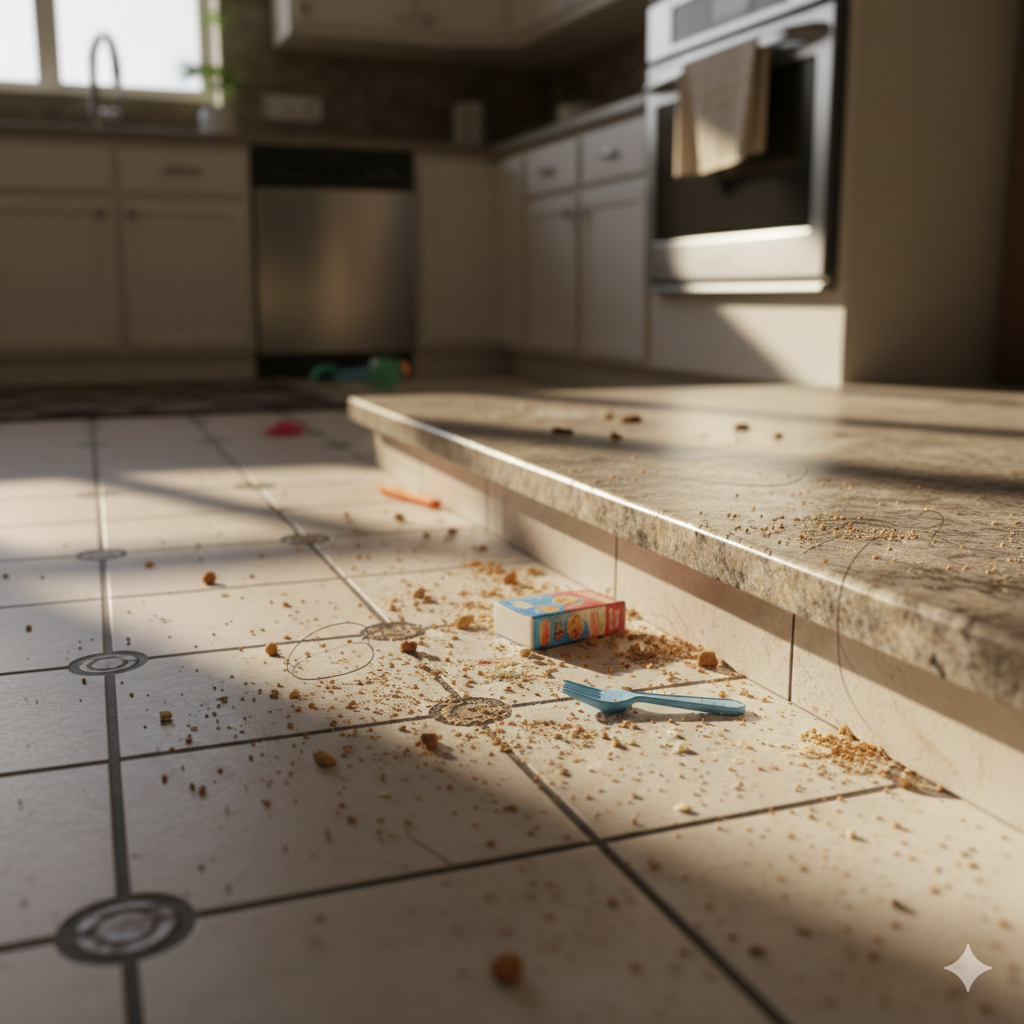
At first glance, crumbs seem easy to clean. However, kitchens have specific conditions that affect cleaning performance.
Types of Kitchen Crumbs
- Dry crumbs (bread, crackers, cereal)
- Fine particles (flour, sugar, spices)
- Mixed debris (crumbs + dust + pet hair)
Kitchen Surfaces
- Hard floors (tile, vinyl, hardwood)
- Countertops
- Stove corners and edges
- Gaps near appliances
A vacuum that works well on one surface may struggle on another.
Are Cheap Handheld Vacuums Good for Kitchen Crumbs?
Short Answer
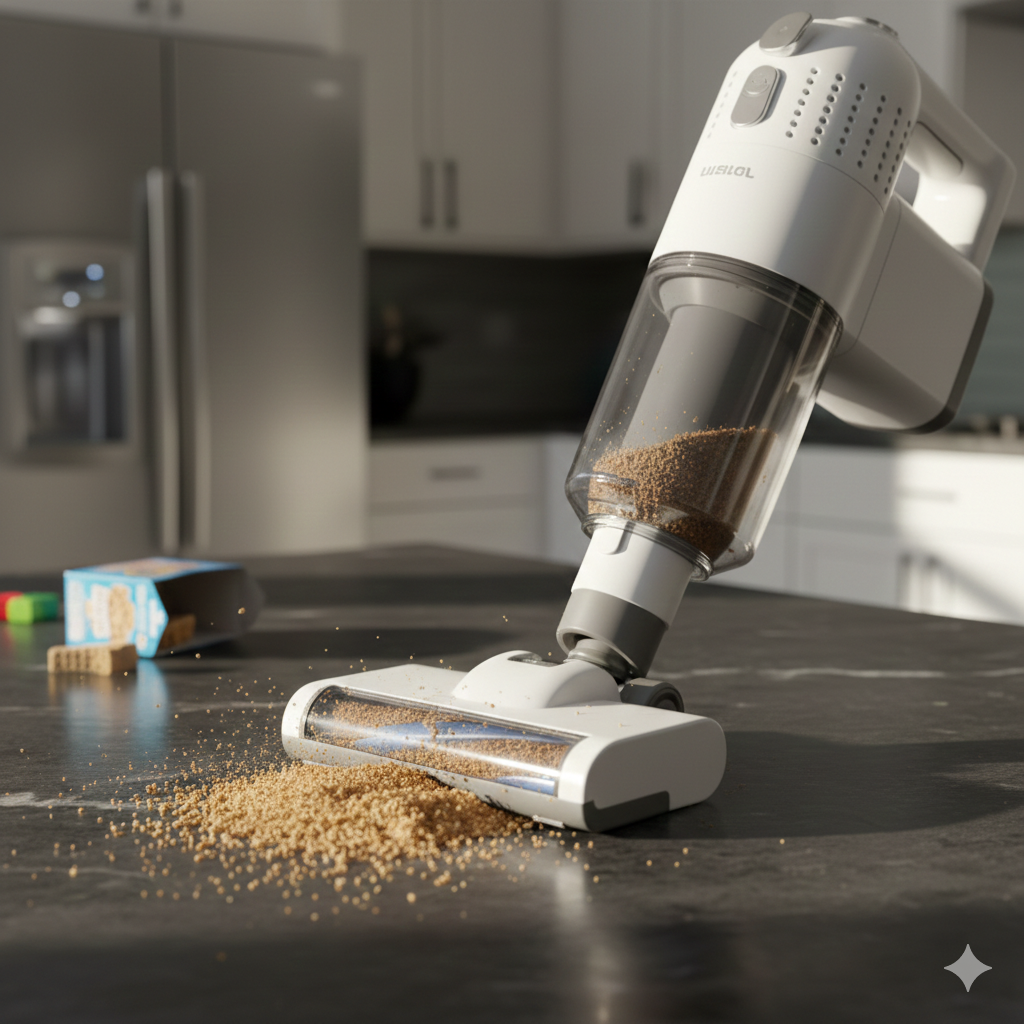
Yes — cheap handheld vacuums can be good for kitchen crumbs, but only for light, dry, and surface-level messes.
They are not designed to replace a full-size vacuum or handle heavy debris.
Where They Perform Well
Cheap handheld vacuums work best when:
- Crumbs are dry
- Mess is small and recent
- Surface is flat and smooth
Examples:
- Bread crumbs on countertops
- Rice spilled near the sink
- Cereal under a table
Where They Struggle
They often struggle with:
- Wet or sticky crumbs
- Large piles of debris
- Crumbs stuck in grout lines
- Thick pet hair mixed with crumbs
Key Factors That Affect Performance on Kitchen Crumbs
Suction Power Matters
Suction power is the most important factor when cleaning crumbs. Cheap handheld vacuums usually have moderate suction, which is enough for loose debris but not embedded dirt.
Good enough for:
- Dry crumbs
- Fine particles on smooth surfaces
Not ideal for:
- Crumbs pressed into corners
- Debris stuck to textured floors
Dustbin Size and Design
Cheap handheld vacuums have small dustbins. This means:
- Frequent emptying
- Reduced airflow when bin fills up
For kitchen crumbs, this is usually manageable because messes are small.
Nozzle Shape and Opening Size
Wide nozzles:
- Pick up crumbs faster
- Miss corners and edges
Narrow nozzles:
- Better for tight spaces
- Slower for open areas
Many cheap models include only one nozzle, limiting flexibility.
Step-by-Step: Using a Cheap Handheld Vacuum for Kitchen Crumbs
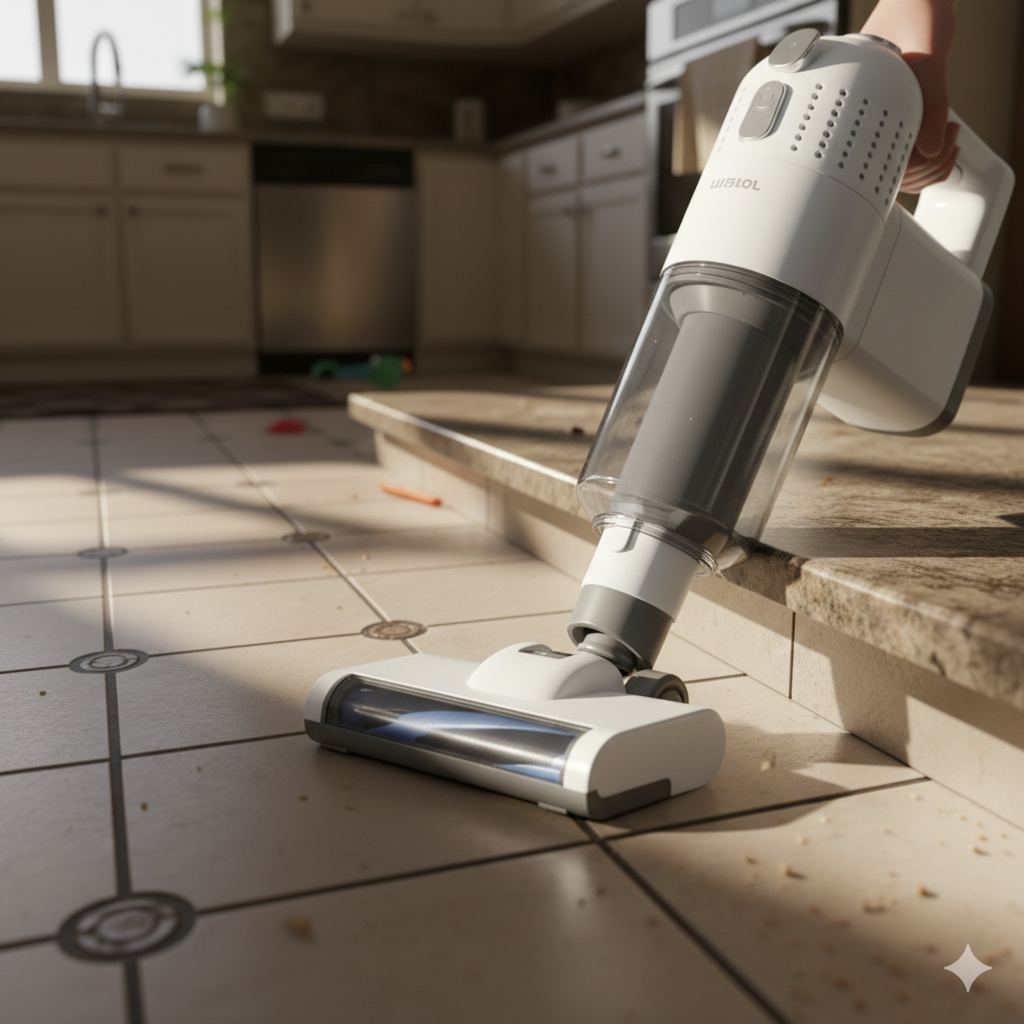
Step 1: Clear Large Objects
Remove napkins, wrappers, or utensils before vacuuming.
Step 2: Use Short Passes
Slow, controlled movements improve pickup efficiency.
Step 3: Angle the Nozzle
Angling helps pull crumbs from edges and corners.
Step 4: Empty the Dustbin Often
A full bin reduces suction significantly.
Benefits of Cheap Handheld Vacuums for Kitchen Use
Convenience and Speed
- No setup required
- Grab-and-go cleaning
- Saves time for daily messes
Lightweight and Easy to Handle
- Ideal for seniors and beginners
- Minimal strain on wrists and arms
Compact Storage
- Fits in kitchen drawers or cabinets
- No dedicated storage space needed
Limitations You Should Know About
Limited Battery Life
Cordless cheap models may run only 10–15 minutes.
Basic Filtration
Fine dust may escape if filters are low quality.
Not for Deep Cleaning
They cannot replace:
- Upright vacuums
- Mopping for sticky messes
Cheap Handheld Vacuum vs Broom for Kitchen Crumbs
When a Handheld Vacuum Is Better
- Crumbs on counters
- Quick cleanups during cooking
- Dust-sensitive environments
When a Broom Is Better
- Large spills
- Outdoor debris tracked inside
- Very rough floor textures
Many homes benefit from using both, depending on the situation.
Are Cheap Handheld Vacuums Safe for Kitchen Surfaces?
Generally, yes.
Safe On:
- Laminate counters
- Tile floors
- Vinyl flooring
Be Careful With:
- Delicate wood finishes
- Loose tiles or grout
Avoid dragging hard plastic nozzles across sensitive surfaces.
Who Should Consider a Cheap Handheld Vacuum?
Cheap handheld vacuums are suitable for:
- Small households
- Apartment dwellers
- Students and renters
- People who want quick daily cleanup
They are not ideal for:
- Large families
- Homes with heavy pet shedding
- Deep cleaning needs
FAQs: People Also Ask
Are handheld vacuums strong enough for kitchen crumbs?
Yes, most handheld vacuums are strong enough for dry kitchen crumbs on flat surfaces, but they may struggle with heavier debris.
Can cheap handheld vacuums replace a regular vacuum?
No, they are best used as a supplement for quick cleanups, not as a replacement.
Do handheld vacuums work on tile kitchen floors?
They work well on tile surfaces but may struggle with crumbs stuck in grout lines.
Are cordless handheld vacuums better for kitchens?
Cordless models are more convenient for kitchens, but battery life can be limited in cheaper versions.
How often should I clean the filter?
For best performance, filters should be cleaned weekly if used daily in the kitchen.
Conclusion
So, are cheap handheld vacuums good for kitchen crumbs? The answer is yes — when used for the right purpose. They are excellent tools for quick, everyday cleanup of dry crumbs and small messes. Their convenience, lightweight design, and ease of storage make them practical for busy kitchens.
However, they do have limitations. Cheap handheld vacuums are not built for deep cleaning, sticky spills, or large debris. Understanding what they can realistically handle helps avoid disappointment and improves cleaning efficiency.
When used as a supporting cleaning tool rather than a primary one, cheap handheld vacuums can be a helpful and time-saving addition to your kitchen routine — especially for maintaining cleanliness throughout the day.