
Introduction
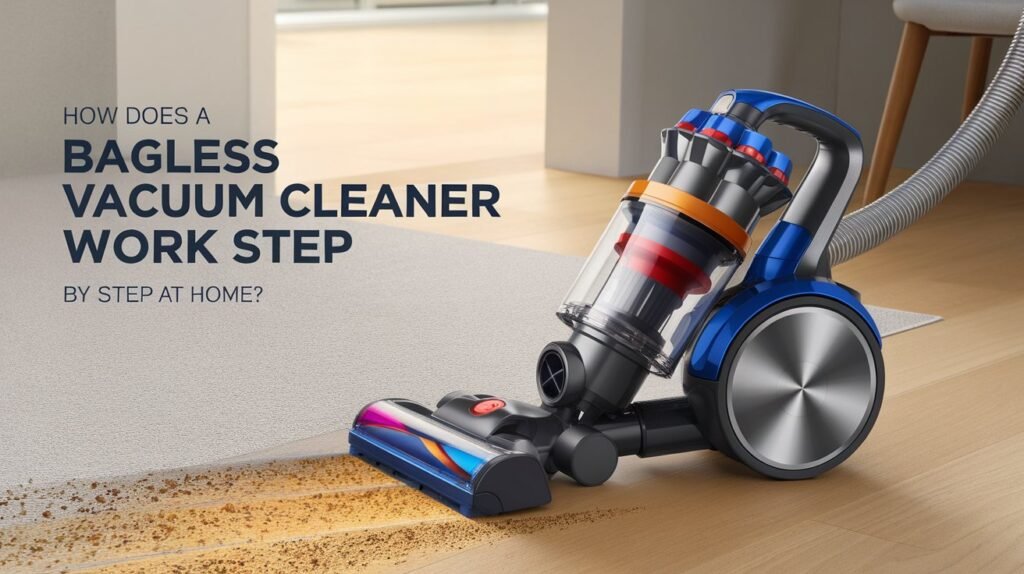
How Does a Bagless Vacuum Cleaner Work Step by Step at Home? If you are wondering how does a bagless vacuum cleaner work step by step at home, you are definitely not alone. Many homeowners use vacuum cleaners every day to keep their homes tidy, yet very few truly understand the internal mechanics that make these devices so effective.
A bagless vacuum cleaner is specifically designed to make cleaning more efficient, easier, and environmentally friendly without the hassle of disposable bags. Unlike traditional vacuums that require constant bag replacements, a bagless model collects dust and debris in a reusable container. This container allows you to see when it’s full, making maintenance straightforward.
Furthermore, bagless vacuums use advanced airflow technology to separate dirt from the air, ensuring suction remains strong while fine dust is trapped in filters. If you’ve ever struggled with a vacuum that loses suction, or noticed that dirt remains on your carpet, understanding this technology can help you maintain optimal performance. For additional help, you can also check a step-by-step guide on how vacuum suction works and how to fix it
Table of Contents
What Is a Bagless Vacuum Cleaner?
A bagless vacuum cleaner is essentially a cleaning device that collects dirt and dust in a removable container rather than a disposable bag. This small but important design difference offers several benefits:
- No need to purchase or replace bags
- Easier and quicker cleaning process
- Visible dirt level in the container
- More environmentally friendly
Compared to traditional bagged vacuums, bagless models provide better long-term cost efficiency and are easier to maintain. If you’re new to vacuum maintenance, a helpful guide to how to clean a vacuum filter properly can improve performance and prolong the life of your device.
Main Parts of a Bagless Vacuum Cleaner
To fully understand how a bagless vacuum cleaner works, it helps to know the main components:
- Motor – Powers the vacuum and generates suction.
- Fan – Pulls air, dirt, and debris into the vacuum.
- Dust Container – Stores collected dirt until emptied.
- Cyclone Chamber – Uses spinning air to separate heavier particles.
- Filters (HEPA or foam) – Trap fine particles and allergens.
- Brush Roller – Loosens and lifts dirt from carpets and floors.
Each part has a crucial role, and together they ensure effective and consistent cleaning.
Step-by-Step: How Does a Bagless Vacuum Cleaner Work at Home
Step 1: Turning On the Vacuum
The cleaning process begins the moment you turn on the vacuum. The motor activates and generates suction power, which is the force that pulls in air, dust, and debris. Modern vacuum motors are designed for high efficiency, providing consistent suction even on thick carpets.
Step 2: Air and Dirt Are Pulled In
Once powered, the nozzle pulls in air along with dirt, crumbs, pet hair, and other debris. Suction allows the vacuum to remove particles from both hard floors and soft carpets effectively.
Pro Tip: For maximum efficiency, move the vacuum slowly and overlap each pass to ensure all debris is lifted.
Step 3: Air Moves Into the Cyclone Chamber
Inside the vacuum, the air enters a cyclone chamber, where it spins rapidly. This spinning motion creates a centrifugal force that pushes heavier particles outward.
Step 4: Dust Separation Happens
Cyclonic action separates the heavy dust particles from the airflow. The heavier particles are forced to the edges and fall into the dust container, while lighter air and finer dust continue through the system.
This is why cyclonic technology prevents clogs and maintains strong suction even as the container fills.
Step 5: Dirt Collects in the Container
All separated dirt and debris fall into a transparent dust container, which is easy to remove and empty. This container allows you to visually monitor how much dirt has been collected.
Tip: Empty the container after every use to prevent airflow restriction and maintain suction efficiency.
Step 6: Filters Clean the Air
The remaining air passes through filters, including HEPA or foam filters, which trap microscopic dust particles and allergens. Proper filtration ensures that clean air is released back into your home, improving indoor air quality.
According to experts from the U.S. Environmental Protection Agency, regular maintenance of filters is crucial for a healthy indoor environment.
Step 7: Clean Air Is Released
Finally, filtered, clean air is released back into your home. This step completes the full cleaning cycle, leaving your space dust-free and maintaining strong suction for continuous cleaning.
How Cyclonic Technology Works
Cyclonic technology is the core of bagless vacuum efficiency. By spinning air at high speeds:
- Dust is separated without clogging filters
- Suction remains consistent
- Maintenance becomes simpler
If your vacuum is struggling, you might want to read about why a vacuum cleaner loses suction quickly . Educational sites like HowStuffWorks provide detailed insights into the science behind vacuum mechanics.
Why Suction Power Matters
Strong suction ensures:
- Deep cleaning of carpets and floors
- Removal of pet hair and stubborn dirt
- Efficient performance across multiple surfaces
Weak suction is often caused by:
- Full dustbins
- Dirty or clogged filters
- Blocked hoses or nozzles
If your vacuum is not picking up dirt properly, check our guide on common vacuum problems and how to fix them
Common Problems and Easy Fixes
❌ Losing Suction
✔ Empty dustbin regularly
✔ Clean or replace filters
❌ Bad Smell
✔ Wash filters and dust container
✔ Let filters dry completely
❌ Not Picking Dirt
✔ Check brush roller for hair or debris
✔ Ensure the nozzle is clear
If pet hair is an issue, also check how to remove hair stuck in a vacuum brush
Bagless vs Bag Vacuum: Quick Comparison
| Feature | Bagless | Bag |
|---|---|---|
| Cost | Low | Higher |
| Maintenance | Easy | Medium |
| Convenience | High | Medium |
| Eco-Friendly | Yes | Less |
Bagless vacuums are ideal for daily home use due to convenience and cost-efficiency, while bagged vacuums may be preferred for heavy-duty or allergy-sensitive cleaning.
Tips to Keep Your Bagless Vacuum Working Efficiently
- Empty the container after every use
- Clean filters every 2–4 weeks
- Check for blockages in hoses and nozzles
- Remove hair and debris from the brush roller
- Avoid overfilling the dust container
Following these steps ensures long-term suction power and cleaning efficiency.
FAQs
1. How does a bagless vacuum cleaner work?
It uses suction, cyclonic separation, and filters to clean and release fresh air into your home.
2. Do bagless vacuums lose suction?
Yes, they can if filters are clogged or the dust container is full. Regular cleaning prevents this.
3. How often should I clean the filter?
Filters should be cleaned every 2–4 weeks depending on usage.
4. Are bagless vacuums good for home use?
Yes, they are convenient, easy to maintain, and cost-effective for modern households.
Conclusion
Now you fully understand how does a bagless vacuum cleaner work step by step at home. By combining suction, airflow, and filtration, bagless vacuums efficiently clean your home while remaining easy to maintain.
With proper care, regular filter cleaning, and timely emptying of the dust container, your vacuum can provide reliable performance for years to come. Following guides on your website can further enhance its efficiency and extend its lifespan.