
Introduction
If your vacuum cleaner is not picking up dirt, has weak suction, or makes unusual noises, you’re not alone. Many homeowners face these issues regularly.
In this guide, we explain vacuum cleaner parts and functions in a simple and practical way. Understanding these components helps you fix common problems at home, improve performance, and extend your vacuum’s lifespan without expensive repairs.
Table of Contents
Quick Answer
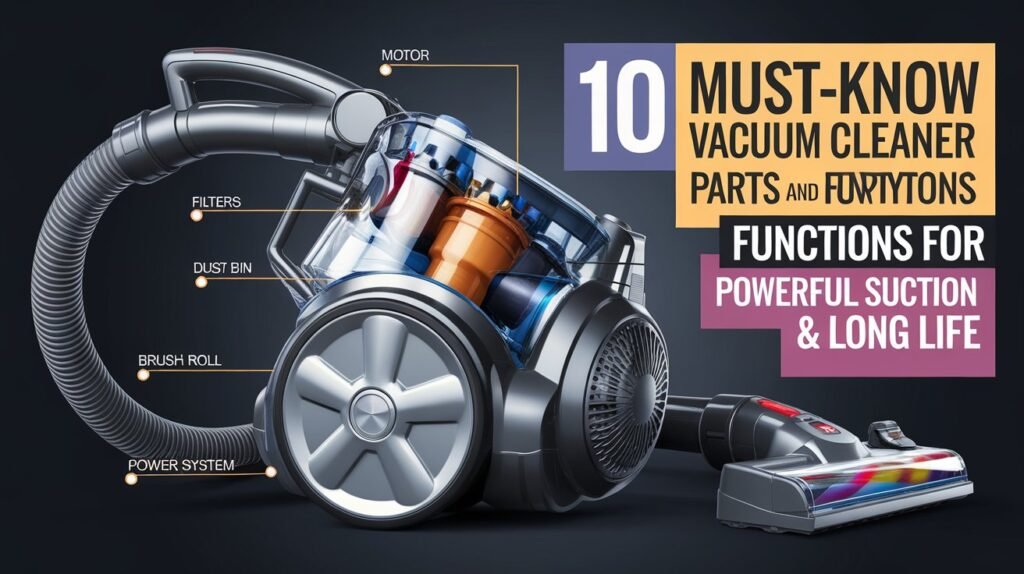
The main vacuum cleaner parts and functions include the motor, filters, dust bin, hose, brush roll, and power system. These components work together to create suction, collect dirt, and maintain cleaning efficiency. Regular maintenance can improve performance by up to 70%.
Vacuum Cleaner Parts and Functions Explained
A vacuum cleaner has several key components that work together:
- Motor & Fan – create suction
- Filters (HEPA, pre/post motor) – trap dust and allergens
- Dust Bin/Bag – collects dirt
- Hose & Wand – carry suction airflow
- Brush Roll – removes deep dirt from carpets
- Power System – supplies electricity or battery power
Understanding these vacuum cleaner parts and functions helps you diagnose issues quickly.
Common Problems with Vacuum Cleaner Parts and Functions
Here are the most common causes of poor performance:
- Clogged or dirty filters
- Full dust bin or bag
- Blocked hose or wand
- Worn-out brush roll
- Motor overheating or dust buildup
- Power cord or battery issues
👉 If you want a full guide on suction issues, check this:
Vacuum Suction Problems
7 Easy Fixes to Solve the Problem
1. Clean the Motor and Fan Assembly
The motor drives suction. Dust buildup reduces efficiency.
Steps:
- Unplug the vacuum
- Clean vents with a soft brush
- Avoid running longer than 30 minutes
2. Clean or Replace Filters
Dirty filters reduce suction by up to 60%.
Steps:
- Remove filter
- Wash (if washable)
- Dry completely
- Replace every 6–12 months
👉 Detailed guide here:
How to Clean Vacuum Filter Properly
3. Empty the Dust Bin Regularly
A full bin instantly reduces performance.
Steps:
- Empty after 2–3 uses
- Clean with mild soap
- Avoid overfilling
4. Check Hose and Wand for Blockage
Hair and debris can block airflow.
Steps:
- Inspect inside
- Remove blockages
- Check for cracks
5. Clean the Brush Roll (Beater Bar)
Hair buildup stops proper rotation.
Steps:
- Remove brush roll
- Cut tangled hair
- Check belt condition
👉 Related fix:
Vacuum Not Picking Up Hair from Carpet
6. Use the Right Attachments
Attachments improve cleaning efficiency.
Steps:
- Use correct tool for surface
- Clean after use
- Store properly
7. Maintain the Power System
Power issues reduce performance.
Steps:
- Untangle cord
- Fully charge battery
- Clean battery contacts
External Resource (Authority Link)
For deeper technical understanding, you can read more here:
Wikipedia: Vacuum Cleaner
Pro Tips for Better Performance
- Clean filters every 2 weeks
- Empty dust bin at ¾ capacity
- Check brush roll monthly
- Store in a dry place
- Use original replacement parts only
FAQs
Q1. What are vacuum cleaner parts and functions?
They include motor, filters, dust bin, hose, and brush roll working together to clean.
Q2. Why is my vacuum losing suction?
Usually due to clogged filters, full bin, or blocked hose.
Q3. How often should I clean my vacuum filter?
Every 2 weeks for best performance.
Q4. Can I fix vacuum problems at home?
Yes, about 90% of issues are easy to fix at home.
Q5. How long does a vacuum cleaner last?
With proper care, 8–12 years.
Conclusion
Understanding vacuum cleaner parts and functions is the key to maintaining strong suction and avoiding costly repairs. By following these simple fixes and tips, you can keep your vacuum running like new for years.
Take a few minutes today to check your vacuum — a small effort can make a big difference in performance and lifespan.