
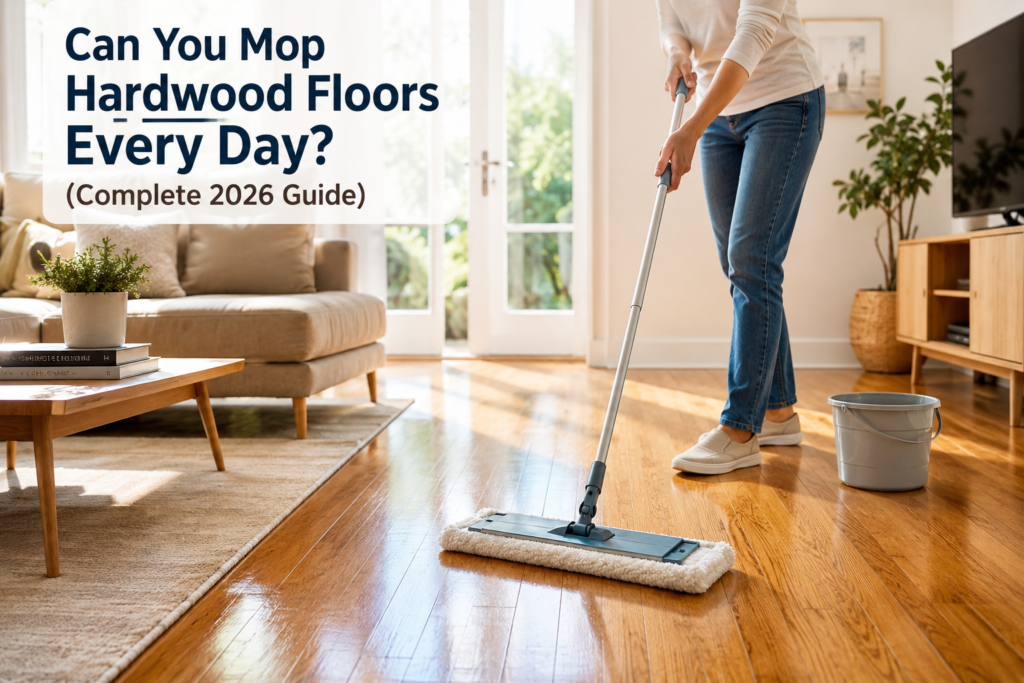
Introduction
If you have hardwood floors, you already know how good they look when they’re clean — and how quickly they can show dust, footprints, and pet hair. That’s exactly why so many homeowners ask the same question: is it okay to mop hardwood floors every single day, or does daily mopping actually cause more harm than good?
Quick answer: Mopping hardwood floors daily is generally safe only if you’re doing a light, dry or barely-damp cleaning. Using a wet mop every day, however, can damage the wood over time by causing warping, dulling the finish, and letting moisture seep between the boards.
In this guide, you’ll learn exactly how often you should mop hardwood floors, the right and wrong ways to do it, common mistakes that damage wood floors, and the best cleaning routine to keep your floors looking new for years.
For a closer look at moisture-based cleaning methods, check out our guide: Can You Use a Steam Mop on Hardwood Floors?
Table of Contents
Quick Answer
Yes, you can mop hardwood floors every day, but only with a dry or slightly damp microfiber mop. Daily wet mopping with standing water is not safe for hardwood, since excess moisture can seep into the wood grain and seams. Daily mopping is fine for dust and light dirt removal, while deeper wet cleaning should be limited to once or twice a week depending on foot traffic.
Can You Mop Hardwood Floors Every Day?
The safety of daily mopping depends entirely on the method you use, not just the frequency.
There’s a big difference between damp mopping and wet mopping. Damp mopping uses a microfiber mop that’s been wrung out until it’s barely moist — this is safe for daily use because it lifts dust and light grime without leaving standing water behind. Wet mopping, on the other hand, involves a saturated mop head or a bucket-and-mop method that leaves visible moisture on the floor, and this is where daily use becomes risky.
Daily mopping is generally okay in situations like:
- Homes with pets that track in dirt frequently
- Kitchens or entryways with high foot traffic
- Households with young kids or frequent spills
Daily mopping should be avoided when:
- You’re using a fully saturated mop or a lot of cleaning solution
- Your floors already show signs of wear, gaps, or old finish
- You don’t dry the floor immediately after cleaning
If you use a steam-based system, it’s worth understanding the extra risks involved — see our full breakdown here: Can You Use a Steam Cleaner on Wood Floors?
Benefits of Mopping Hardwood Floors Regularly
Removes Dust and Allergens
Regular mopping picks up fine dust, pollen, and pet dander that a broom or vacuum alone might miss, especially in the grooves between floorboards.
Improves Indoor Air Quality
Less dust sitting on the floor means less dust getting kicked back into the air you breathe, which is especially helpful for allergy sufferers.
Keeps Floors Looking New
Consistent light cleaning prevents dirt from building up into a dull film that makes hardwood look aged before its time.
Prevents Dirt Build-Up
Small particles of grit act like sandpaper under foot traffic. Removing them regularly protects the floor’s finish from tiny scratches.
Why Daily Mopping Can Damage Hardwood Floors
Excess Moisture Can Cause Warping
Wood naturally absorbs moisture. Repeated exposure to standing water can cause boards to swell, cup, or warp over time.
Daily Mopping Can Wear Down the Finish
Frequent contact with cleaning solutions, especially harsh or acidic ones, can gradually strip away the protective finish that keeps hardwood looking glossy.
Water May Seep Between Floorboards
Even if the surface looks dry, water can travel into the seams between boards, leading to hidden damage that shows up much later.
Soap Residue Can Make Floors Sticky
Using too much cleaner daily can leave a sticky film behind, which actually attracts more dirt instead of removing it.
To understand this specific issue in more depth, read: Why Does My Floor Feel Sticky After Mopping?
When You Should NOT Mop Hardwood Floors
Newly Finished Floors
Freshly finished or refinished floors need time to fully cure — usually several weeks — before they’re exposed to any moisture.
Water-Damaged Floors
If your floor already has water stains, swelling, or soft spots, additional moisture from mopping will only worsen the damage.
Waxed Hardwood Floors
Wax finishes react poorly to water-based cleaners, which can dull or strip the wax coating entirely.
Unsealed Hardwood Floors
Unsealed or unfinished wood has no protective barrier, so it absorbs moisture almost immediately — mopping should be avoided altogether.
How Often Should You Mop Hardwood Floors?
Homes with Pets
Two to three times a week, using a dry or damp mop, plus daily dust removal to handle fur and tracked-in dirt.
Families with Kids
Two to three times a week for wet cleaning, with quick spot-cleaning as spills happen throughout the day.
Low-Traffic Homes
Once a week is typically enough, since dust and dirt build up more slowly.
High-Traffic Areas
Entryways, kitchens, and hallways may need damp mopping every day or every other day, focusing on dust and grit rather than deep wet cleaning.
Daily vs Weekly Mopping
| Daily Mopping | Weekly Mopping |
|---|---|
| Removes surface dust | Deep cleaning |
| Higher moisture risk | Lower moisture exposure |
| Best for busy homes | Best for most households |
The Best Way to Mop Hardwood Floors
Remove Dust Before Mopping
Sweep or vacuum first so you’re not just pushing grit around, which can scratch the floor during mopping.
Use a Damp Microfiber Mop
Microfiber traps dirt effectively while holding very little water, making it the safest tool for hardwood.
Use a Hardwood Floor Cleaner
Choose a cleaner specifically formulated for hardwood rather than an all-purpose or vinegar-based solution.
For a streak-free finish every time, check out our step-by-step guide: How to Mop Floors Without Leaving Streaks
Dry the Floor Immediately
Use a clean, dry towel or mop pass to remove any remaining moisture right after cleaning.
Common Mistakes That Damage Hardwood Floors
Using Too Much Water
Oversaturating the mop is the single biggest cause of hardwood floor damage from cleaning.
Using a Steam Mop Incorrectly
Steam mops can force moisture into seams and finishes if used too frequently or on the wrong type of hardwood.
Learn the right way to use one safely: Can You Use a Steam Mop on Hardwood Floors?
Using Harsh Chemicals
Ammonia, bleach, and vinegar-based cleaners can break down the floor’s finish over repeated use.
Leaving Water on the Surface
Standing water left to air-dry gives moisture more time to penetrate the wood.
Signs You’re Mopping Too Often
Floors Feel Sticky
A tacky residue is often a sign of cleaner buildup from over-mopping.
See our full explanation here: Why Does My Floor Feel Sticky After Mopping?
Dull Finish
Loss of shine over time usually points to finish wear from excess moisture or harsh cleaners.
Swollen Boards
Boards that feel raised or uneven at the seams indicate moisture has gotten underneath the surface.
Water Stains
Dark or discolored patches are a clear sign that water has soaked into the wood.
Best Hardwood Floor Cleaning Routine
Daily Cleaning
Dry dust mop or vacuum to remove loose dirt and debris.
Weekly Cleaning
Damp mop with a hardwood-safe cleaner, followed by immediate drying.
Monthly Maintenance
Check for scratches, dull spots, or early signs of finish wear.
Seasonal Deep Cleaning
Consider a professional-grade cleaner or light buffing to restore shine every few months.
Best Mop for Hardwood Floors
Microfiber Mop
The safest and most popular choice — gentle, absorbent, and low-moisture.
Spray Mop
Convenient for controlled, light moisture application in daily cleaning.
Flat Mop
Great for reaching under furniture and along baseboards with minimal water use.
Avoid Traditional String Mops
These hold too much water and are more likely to leave standing moisture on the floor.
Expert Tips for Safe Hardwood Floor Cleaning
Always Use a Microfiber Mop
It reduces the risk of scratching and controls moisture better than any other mop type.
Avoid Standing Water
Never let water pool or sit on hardwood, even for a few minutes.
Choose a pH-Neutral Cleaner
Neutral cleaners protect the finish, unlike acidic or alkaline products.
Clean Spills Immediately
Don’t wait — the longer liquid sits, the more likely it is to seep into the wood.
Follow the Manufacturer’s Care Instructions
Different finishes and wood types have different care requirements, so always check what your manufacturer recommends.
Hardwood Floor Cleaning Myths
Myth #1: More Water Cleans Better
More water actually increases the risk of damage without improving cleaning results.
Myth #2: Steam Mops Are Safe for Every Hardwood Floor
Not all finishes can handle steam — some can warp or discolor from heat and moisture exposure.
Myth #3: Vinegar Is Always Safe
Vinegar’s acidity can break down certain finishes over repeated use, despite being a popular “natural” cleaning myth.
Myth #4: Daily Wet Mopping Makes Floors Last Longer
In reality, it’s usually the opposite — daily wet mopping tends to shorten the life of the finish.
Frequently Asked Questions
Can I mop hardwood floors every day?
Yes, but only with a dry or barely damp microfiber mop. Daily wet mopping is not recommended.
Is water bad for hardwood floors?
Standing water is bad for hardwood, but small amounts used correctly and dried immediately are generally safe.
Can I use a steam mop every day?
No — daily steam mopping is not recommended for most hardwood floors due to repeated heat and moisture exposure.
What’s the safest cleaner for hardwood floors?
A pH-neutral cleaner specifically designed for hardwood floors is the safest option.
How long should hardwood floors take to dry?
Hardwood floors should dry within a few minutes after mopping; if it’s taking longer, you’re likely using too much water.
What happens if I use too much water?
Excess water can cause warping, swelling, discoloration, and long-term damage to the wood and its finish.
Final Verdict
Mopping your hardwood floors every day isn’t harmful — as long as you’re using the right technique. Stick to dry or lightly damp microfiber mopping for daily upkeep, and reserve deeper wet cleaning for once or twice a week. Avoid standing water, harsh chemicals, and oversaturated mop heads, and always dry the floor immediately after cleaning.
Key takeaways:
- Daily dry/damp mopping = safe
- Daily wet mopping = risky
- Deep wet cleaning = 1–2 times per week
- Always dry floors immediately after mopping
With the right routine and the right tools, your hardwood floors can stay clean, protected, and beautiful for years to come.