
Introduction
If your house smells faintly sour right after you mop, the floor is not the problem. The mop is. A mop head collects dirt, grease, hair and moisture every time you use it, and if it is not cleaned properly, it becomes a breeding ground for bacteria and mildew. At that point, mopping does not clean your floors. It just moves dirty water around and leaves a smell behind.
The fix is simple once you know the routine. This guide covers how to wash a mop head by hand or machine, how to disinfect it safely, and how to stop the smell from coming back. For tool recommendations, see our mop reviews and buying guides: https://vacuumandmop.com/category/mops/
Table of Contents
Why Mop Heads Start to Smell
A mop head is almost always damp, which is exactly the condition bacteria and mold need to grow. The smell usually comes from one or more of these causes:
- Storing it wet. A mop put away damp, in a closet with no airflow, stays wet for hours or days.
- Reusing dirty water. Mopping with water that is already full of dirt just redistributes grime and bacteria.
- Skipping regular washing. Rinsing a mop under the tap is not the same as actually washing it.
- Trapped hair and debris. Hair, dust and food particles get caught in the fibers and rot over time.
- Fabric softener buildup. Softener coats the fibers and can trap odor-causing residue instead of releasing it.
Once you understand the cause, the fix becomes obvious: clean the mop properly, and dry it fully.
I didn’t take this seriously until a friend visiting my place asked, half joking, why the hallway smelled like a wet towel. I was rinsing my mop under the tap after every use and calling it done, but I never actually washed it, and I was definitely storing it damp in a closed cupboard. Once I started doing a proper weekly wash and hanging it up to dry in the open instead of shutting it away, the smell disappeared within a week. It genuinely surprised me how much of a difference just drying it properly made.
How Often Should You Clean a Mop Head?
- Rinse: after every single use, even for a quick job.
- Full wash: every one to two weeks for regular household use, or after any especially dirty job such as mud, pet accidents or a greasy kitchen floor.
- Disinfect: every few uses, or immediately after mopping up anything related to illness, raw food spills or pet waste.
- Replace: every two to six months depending on material and use, or sooner if the smell will not go away even after washing.
What You Need
- A bucket or sink large enough to fully submerge the mop head
- Mild dish soap or laundry detergent
- White vinegar or baking soda (optional, for odor control)
- A disinfectant such as diluted bleach, if needed
- Rubber gloves
- A place with good airflow to dry the mop
Step-by-Step: How to Clean a Mop Head by Hand
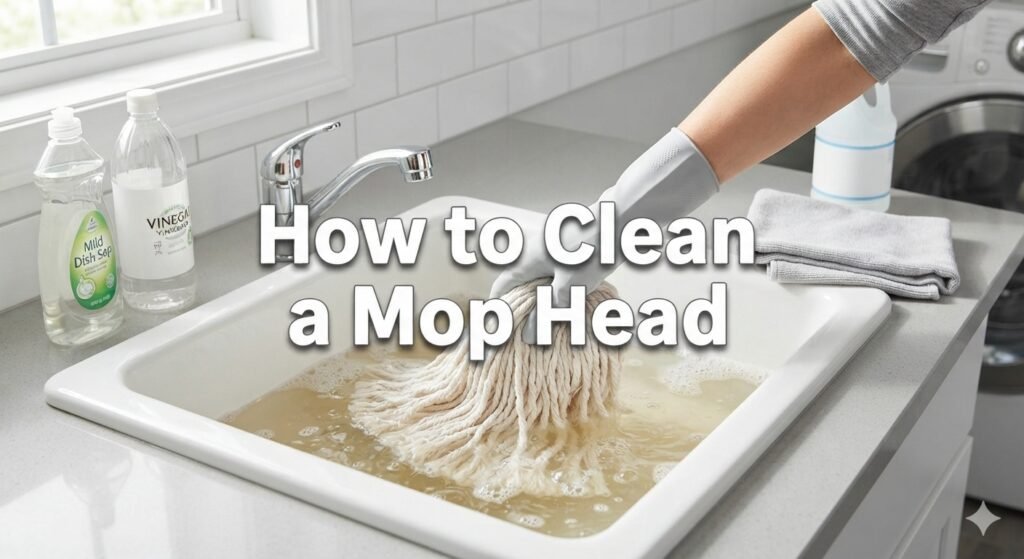
Step 1: Rinse off loose dirt. Hold the mop head under warm running water, or swirl it in a bucket of clean water, until the water runs mostly clear. This removes the surface dirt before you start the deeper clean.
Step 2: Soak in a soapy solution. Fill a bucket with warm water and add a small amount of mild dish soap or laundry detergent. Submerge the mop head completely and let it soak for 15 to 30 minutes. This loosens grime and buildup that rinsing alone cannot remove.
Step 3: Scrub and agitate. Put on gloves and work the mop head with your hands, squeezing and twisting to release trapped dirt. For stubborn spots or tangled hair, use an old brush or comb through the strands.
Step 4: Rinse thoroughly. Empty the dirty water, refill with clean water, and rinse the mop head until no more soap or dirt comes out. Repeat if the water still looks cloudy.
Step 5: Wring out excess water. Squeeze or wring the mop head firmly to remove as much water as possible. The less water left in it, the faster and more completely it will dry.
Step 6: Dry it completely. Hang the mop head upside down or outdoors in sunlight and open air. A mop that dries fully between uses rarely develops a smell. Avoid folding it into a closet while still damp.
How to Clean a Mop Head in the Washing Machine
Many detachable mop heads, especially microfiber and cotton string types, can go in the washing machine.
- Shake off loose debris outside first.
- Check the care label. If none is available, use a gentle or normal cycle with warm water.
- Wash mop heads on their own, not mixed with towels, clothing or other laundry.
- Use a small amount of regular detergent. Skip fabric softener, since it coats fibers and reduces how well they absorb dirt and water.
- Air dry when possible, or tumble dry on low heat. High heat can damage certain microfiber blends.
Sponge mop heads and some foam pads are usually not machine safe. Hand wash these instead.
How to Disinfect a Mop Head Safely
Washing removes dirt. Disinfecting kills remaining germs, which matters most after mopping up something like pet waste, raw food spills, or illness-related messes.
- Wash the mop head first. Disinfecting a dirty mop head is far less effective.
- Mix a disinfecting solution, such as a diluted bleach solution, following the ratio on the product label.
- Submerge the mop head and let it soak for the time stated on the label, often around 10 minutes.
- Rinse thoroughly with clean water until you can no longer smell the disinfectant.
- Dry completely before storing or reusing.
Safety note: Never mix bleach with vinegar, ammonia or other cleaning products. Combining them can create toxic fumes. The CDC’s guidance on cleaning and disinfecting with bleach (https://www.cdc.gov/hygiene/about/cleaning-and-disinfecting-with-bleach.html) is clear that bleach should never be mixed with other cleaners or disinfectants, and that you should always follow the dilution and ventilation instructions on the product label.
Natural Odor-Removal Options
If you prefer to avoid bleach for routine cleaning, these options help with odor:
- White vinegar soak: Soak the mop head in a mix of roughly one part vinegar to four parts warm water for 20 to 30 minutes, then rinse well.
- Baking soda: Sprinkle baking soda on the damp mop head before a final rinse, or add a few tablespoons to the wash water.
- Sunlight: UV light helps reduce bacteria and speeds up drying. Hanging the mop head outside on a sunny day is a simple extra step.
These methods are gentler on fibers than bleach and are a good routine choice between deeper disinfecting sessions.
How to Clean Different Types of Mop Heads
Microfiber mop pads: Machine washable in most cases. Wash on a gentle cycle, skip fabric softener, and air dry or tumble dry on low heat to protect the fibers that trap dust.
Cotton string mops: Can usually be soaked and hand washed, or machine washed if detachable. Wring thoroughly, since cotton holds a lot of water and takes longer to dry.
Sponge mop heads: Usually not machine safe. Hand wash by soaking and squeezing repeatedly to flush out trapped dirt, then rinse and air dry.
Spin mop heads: Most spin mop heads are machine washable. Check the manufacturer’s care instructions, since some recommend hand washing only.
Dust mop heads: These are used dry, so cleaning means shaking out debris outdoors, then soaking in warm soapy water if washable, or vacuuming the pad if it is not.
Removing Hair and Debris From a Mop
Hair wrapped around mop strands is one of the most common complaints, especially in pet friendly homes.
- Soak the mop head to loosen tangled hair.
- Use a wide-tooth comb or an old fork to work through the strands.
- Pull loose clumps out by hand.
- Rinse and repeat if needed.
Doing this regularly, rather than letting hair build up over months, makes the job much faster each time.
Common Mistakes That Keep a Mop Smelling Bad
- Storing it wet. This is the single biggest cause of lingering odor.
- Mopping with dirty water. Change the water as soon as it looks grey, rather than finishing the whole house with one bucket.
- Using too much fabric softener. It coats fibers and traps odor rather than removing it.
- Skipping the full wash. A quick rinse under the tap does not remove embedded bacteria.
- Washing mop heads with regular laundry. This can transfer bacteria and lint to other items and reduce the mop’s own cleaning.
- Never replacing an old mop. Some smells do not go away because the material has broken down and can no longer be fully cleaned.
How to Store a Mop So It Stays Fresh
- Always dry the mop head fully before storing it.
- Hang it up rather than leaning it in a closed cupboard.
- Store it in a spot with airflow, not a sealed plastic bag or tightly shut cabinet.
- Keep the mop head off the floor between uses, using a wall hook or a mop holder.
- Wash the bucket too, since a dirty bucket can reintroduce smell and bacteria to a freshly cleaned mop head.
When to Replace Your Mop
Even with good care, mop heads do not last forever. Replace yours if:
- The smell returns within a day or two of washing, even after a full wash and dry.
- Fibers are visibly frayed, thin or falling apart.
- It no longer picks up dirt or liquid effectively.
- It has been in regular use for more than about six months.
A fresh mop head is inexpensive compared to the time spent trying to rescue one that is past saving. Browse replacement mop heads and full mop sets: https://vacuumandmop.com/category/mops/
Quick Checklist
- Rinse after every use
- Wash fully every one to two weeks
- Skip fabric softener
- Disinfect after messy or risky spills
- Never mix bleach with vinegar or ammonia
- Wring out as much water as possible
- Dry completely before storing
- Replace when smell or wear does not improve
FAQ
Why does my mop smell bad even after washing?
It is usually stored damp, or the wash did not fully remove trapped bacteria. Make sure it is washed thoroughly and dried completely in open air.
Can I put a mop head in the washing machine?
Most microfiber, spin mop and cotton string heads can go in the machine if they detach. Wash them alone, skip fabric softener, and check the care label first.
How often should I wash my mop head?
Rinse after every use and do a full wash every one to two weeks, or sooner for heavy messes.
Is it safe to disinfect a mop head with bleach?
Yes, when diluted correctly and used alone. Never mix bleach with vinegar or ammonia, and always rinse thoroughly afterward.
How do I get hair out of my mop?
Soak the mop head to loosen hair, then comb through with a wide-tooth comb or old fork and rinse.
What is the best natural way to deodorize a mop head?
A vinegar soak or a baking soda rinse both help with odor and are gentler than bleach for routine use.
Final Thoughts
A clean floor starts with a clean mop. Rinse after every use, wash on a regular schedule, dry fully, and disinfect when the job calls for it. Keep bleach and vinegar separate, and replace your mop head when it stops responding to a proper wash. For mop heads, spin mops and flat microfiber systems, browse our mops category: https://vacuumandmop.com/category/mops/, or visit the Vacuum and Mop homepage: https://vacuumandmop.com/