
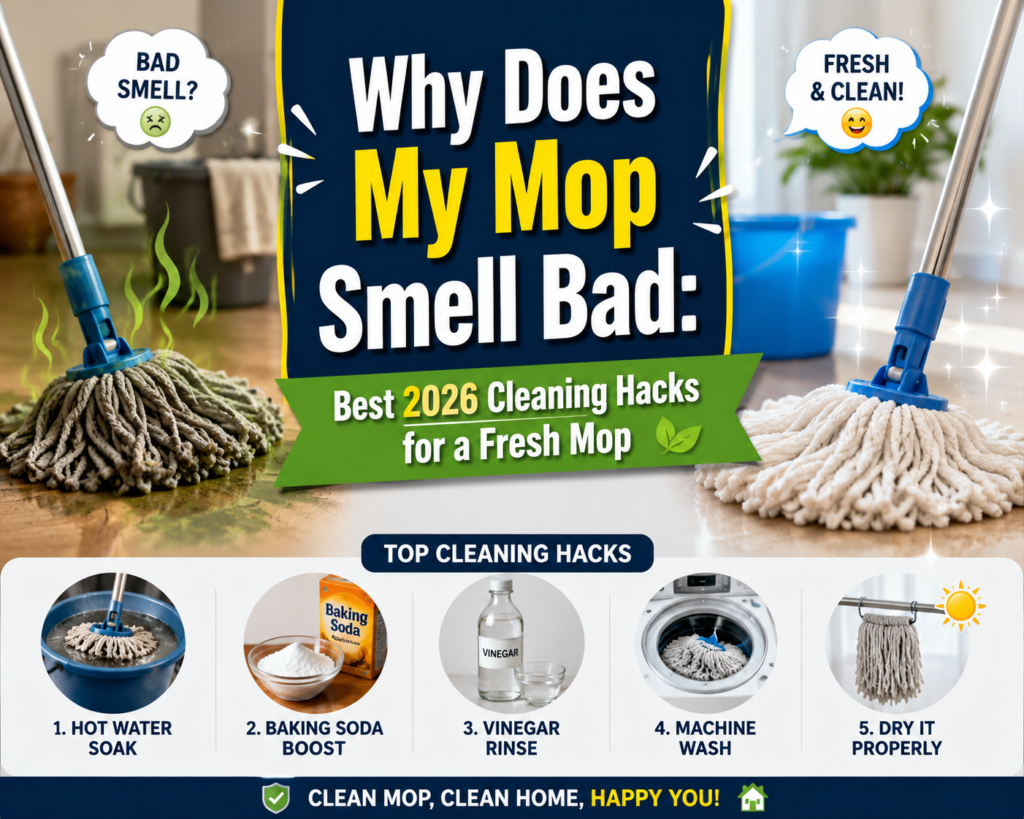
Introduction
A bad-smelling mop is one of the most frustrating household cleaning problems. Instead of cleaning your floors, a dirty mop can actually spread odor, bacteria, and invisible germs across your home.
This usually happens when a mop is not dried properly after use, allowing moisture, dirt, and organic residue to stay trapped inside the fibers. Over time, this creates the perfect environment for bacteria and mold to grow.
In this complete 2026 guide, you will learn:
- Why your mop smells bad
- How to remove mop odor permanently
- How to disinfect a smelly mop properly
- How to prevent mop smell from coming back
- Long-term mop maintenance strategies
Table of Contents
Quick Answer: Why Does My Mop Smell Bad?
A mop smells bad when moisture, dirt, and bacteria get trapped inside the fibers. If the mop is not properly washed, disinfected, or fully dried after use, microorganisms multiply quickly and produce foul-smelling gases. Regular cleaning, proper rinsing, and complete air-drying prevent this problem effectively.
Common Causes of Mop Odor at a Glance
| Cause | Severity | Solution |
|---|---|---|
| Bacteria buildup | High | Deep disinfect cleaning |
| Mold & mildew | High | Remove moisture + dry fully |
| Wet storage | Medium | Air dry before storing |
| Dirty mop water | Medium | Use fresh water every time |
| Trapped dirt & grease | Medium | Proper washing routine |
Why Does My Mop Smell Bad? (Deep Explanation)
1. Bacteria Growth Inside Mop Fibers
Mop fibers are designed to absorb water and trap dirt. But this also makes them a perfect breeding ground for bacteria.
When organic material like dust, food particles, or grease gets trapped inside the mop, bacteria begin to feed on it. During this process, they release gases such as sulfur compounds that create a strong, unpleasant odor.
why does my mop smell bad even after cleaning it properly
2. Mold and Mildew From Excess Moisture
If a mop remains wet for hours or days, mold spores begin growing deep inside the fibers.
This leads to:
- Musty basement-like smell
- Dark patches on mop strands
- Permanent odor if ignored
how to remove mold smell from mop head naturally at home
73. Dirt, Oil, and Cleaning Residue Build-Up
Even if your floors look clean, mop fibers collect:
- Grease from kitchen floors
- Soap residue from detergents
- Fine dust particles
When this buildup is not removed, it breaks down and creates a sour smell over time.
why does my mop smell sour after mopping kitchen floor
🪣 4. Improper Wet Storage
One of the biggest mistakes is storing a wet mop inside:
- Buckets
- Closed cabinets
- Bathroom corners
This traps moisture and creates a sealed environment for bacteria growth.
why does my mop smell worse after storing it wet
5. Poor Drying Conditions
Mops need proper airflow to dry fully.
Without ventilation or sunlight:
- Moisture stays trapped
- Bacteria multiply faster
- Smell becomes stronger in hours
fastest way to dry mop without bad smell naturally
Signs Your Mop Needs Immediate Cleaning
If you notice any of these, your mop is already contaminated:
- Strong sour or musty smell
- Black or green mold spots
- Slimy or sticky texture
- Smell returns after washing
- Floors smell worse after mopping
Is a Smelly Mop Caused by Bacteria or Mold?
In most cases, it is a combination of both.
How Bacteria Create Odor
Bacteria break down organic matter inside mop fibers and release foul-smelling gases as waste byproducts.
Signs of Mold Growth
- Musty “wet soil” smell
- Dark green or black patches
- Damp fibers even after drying
Health Risks
A contaminated mop can:
- Spread bacteria across floors
- Trigger allergies and asthma
- Cause skin irritation
- Increase indoor air pollution
Different Types of Mops and Why They Smell
Microfiber Mops
Microfiber traps microscopic dust and moisture efficiently, but if not washed properly, it becomes a major odor source.
why does microfiber mop smell after washing machine cycle
Cotton String Mops
These hold large amounts of water but take longer to dry, increasing bacterial growth inside thick fibers.
Sponge Mops
Sponge mops absorb deep moisture and often retain dirty water inside, causing long-lasting odors.
Which Mop Smells Least?
Flat microfiber mops with removable pads are the most hygienic when:
- Washed regularly
- Fully dried after use
- Stored in open air
How Fast Does a Mop Start Smelling?
A mop can start smelling within 24 to 48 hours if:
- Left wet
- Not cleaned properly
- Stored in closed spaces
Key Factors:
- Humidity level
- Cleaning frequency
- Mop material
- Air circulation
How to Deep Clean a Smelly Mop (Step-by-Step)
1. Rinse Immediately After Use
Remove dirt before it dries:
- Use hot running water
- Remove visible debris
- Rinse until water is clear
how to rinse mop properly after cleaning floors step by step
2. Wash Thoroughly
Manual or machine washing removes deep buildup.
Manual Method:
- Warm water + detergent
- Soak 10–15 minutes
- Scrub gently
Machine Method:
- Mesh laundry bag
- Hot cycle
- No fabric softener
can you safely wash mop head in washing machine
3. Disinfect Properly
Kill odor-causing bacteria:
- Cotton mop → bleach solution
- Microfiber → vinegar solution
Soak 10–20 minutes.
how to disinfect smelly mop without bleach safely
4. Remove Excess Water
- Wring 2–3 times
- Use spin bucket if available
- Ensure damp, not dripping
how to remove excess water from mop quickly
5. Dry Completely
Best methods:
- Sunlight drying (UV kills bacteria)
- Hanging in open air
- Avoid closed rooms
best way to dry mop fast without odor
Natural Remedies for Mop Odor Removal
White Vinegar Soak
- Mix 1:1 water and vinegar
- Soak 30–45 minutes
- Rinse well
✔ Removes bacteria
✔ Neutralizes smell
Baking Soda Treatment
- Add 1 cup baking soda
- Soak overnight
✔ Deep odor removal
✔ Works on old mops
Lemon Water Method
- Boil water with lemon slices
- Dip mop for 10 minutes
- Sun dry
✔ Fresh scent
✔ Mild disinfectant
Hot Water Shock
- Pour hot water over mop
- Wait 5–10 minutes
- Rinse and dry
✔ Kills surface bacteria quickly
Mistakes That Make Mop Smell Worse
- Leaving mop wet overnight
- Reusing dirty mop water
- Skipping disinfecting step
- Storing in closed buckets
- Using old mop heads
why does my mop smell worse after cleaning it at home
Can a Smelly Mop Make Floors Dirty?
Yes — a dirty mop does NOT clean floors; it spreads contamination.
Effects:
- Spreads bacteria across rooms
- Leaves sticky residue
- Causes bad odor after drying
- Attracts dust faster
How to Prevent Mop Smell Permanently
Daily Routine
- Rinse immediately
- Wring thoroughly
- Hang in open air
Weekly Routine
- Deep wash
- Disinfect mop
- Clean bucket
Monthly Routine
- Inspect fibers
- Replace if worn
- Rotate mop heads
how to stop mop from smelling permanently at home
When Should You Replace a Mop Head?
Replace when:
- Smell doesn’t go away
- Fibers are damaged
- Cleaning becomes ineffective
- Mold returns repeatedly
when to replace mop head signs and symptoms
Frequently Asked Questions (FAQS)
Why does my mop still smell after washing?
Because bacteria and mold remain deep inside fibers.
What removes mop smell permanently?
Disinfecting + full sunlight drying works best.
Why does microfiber mop smell after use?
Because it traps moisture if not dried properly.
Can mold grow inside mop?
Yes, especially in dark and wet storage areas.
How do I stop mop from smelling again?
Clean, disinfect, and dry after every use.
Is vinegar enough to clean mop smell?
It helps, but severe cases need stronger disinfectants.
Conclusion
A smelly mop is mainly caused by moisture, bacteria, mold, and trapped dirt, but it is completely fixable with proper care.
The golden rule is simple:
Clean immediately
Disinfect regularly
Dry completely