
Introduction
If you’ve recently cleaned your vacuum filter but your vacuum cleaner still smells dusty, you’re not alone. Many homeowners assume that washing or replacing the filter will instantly eliminate unpleasant odors. However, in many cases, the filter is only one part of the problem.
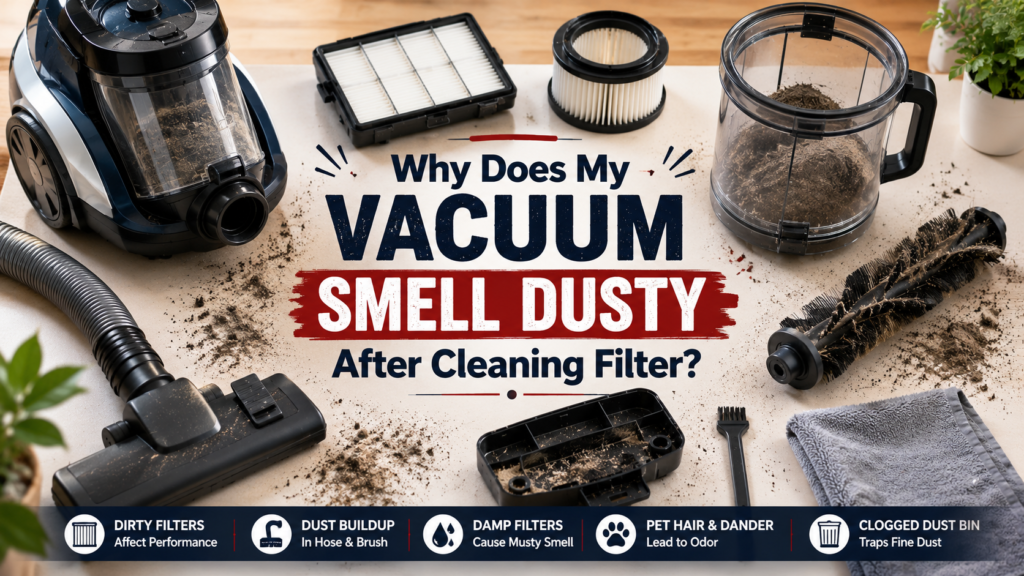
A dusty smell coming from a vacuum cleaner can be caused by trapped dirt inside the hose, dust buildup around the motor, pet hair, damp filters, clogged airways, or even hidden mold growth. When the vacuum runs, air moves through these areas and pushes stale odors back into your home.
The good news is that most dusty vacuum smells are easy to identify and fix with proper maintenance. In this guide, you’ll learn the most common reasons your vacuum cleaner smells dusty after cleaning the filter, how to remove the odor, and what steps you can take to prevent it from returning.
If you’re also experiencing reduced suction, check our guide on Why Does My Vacuum Cleaner Lose Suction?
Table of Contents
Quick Answer
If your vacuum cleaner smells dusty after cleaning the filter, the odor is usually coming from another part of the machine. Common causes include dust trapped in the hose, dirty brush rolls, pet hair buildup, a damp filter, mold growth, a full dust bin, or dust accumulation near the motor. Thoroughly cleaning all vacuum components and allowing filters to dry completely usually solves the problem.
Why Does My Vacuum Cleaner Smell Dusty After Cleaning Filter?
Cleaning the filter is an important maintenance task, but it doesn’t always remove the source of the odor. Dust and debris can collect in multiple areas of the vacuum, creating smells that continue even after the filter is spotless.
Let’s look at the most common causes.
Dust Is Trapped in Other Parts of the Vacuum
Many vacuum owners focus only on the filter while ignoring other components that collect dirt over time.
Dust can accumulate in:
- Internal air channels
- Brush roll housing
- Hose connections
- Exhaust vents
- Motor compartment
When airflow passes through these dusty areas, it carries the odor into the room.
Even if the filter is perfectly clean, hidden dust deposits can continue producing a stale smell every time you vacuum.
A complete vacuum cleaning should include all major components rather than the filter alone.
The Filter Was Not Completely Dry Before Reinstallation
This is one of the most common mistakes homeowners make.
After washing a reusable filter, many people reinstall it before it has fully dried. Moisture trapped inside the filter can create a musty, dusty smell that becomes noticeable when airflow passes through it.
Signs your filter may still be damp include:
- A musty odor immediately after cleaning
- Reduced airflow
- Slight moisture on the filter surface
- Odor that worsens during operation
Most washable filters require at least 24 hours to dry completely. Some thick HEPA filters may need up to 48 hours depending on humidity levels.
Never use a hair dryer or direct heat source unless the manufacturer specifically recommends it.
For detailed instructions, read our guide on How to Clean a HEPA Filter Properly
Dust Has Accumulated Inside the Hose
The vacuum hose is one of the most overlooked sources of unpleasant odors.
Over time, fine dust particles stick to the inner walls of the hose. Hair, lint, and debris can also create partial blockages that trap dirt and moisture.
As airflow passes through the hose, these contaminants release a dusty smell into the air.
Common signs of a dirty hose include:
- Persistent dusty odors
- Reduced suction power
- Visible debris inside the hose
- Dust blowing from the exhaust
To inspect the hose:
- Disconnect it from the vacuum.
- Shine a flashlight through the hose.
- Look for blockages or heavy dust buildup.
- Remove debris using a flexible cleaning brush.
If your vacuum is blowing dust back into the room, read our article on Why Is My Vacuum Blowing Dust Back Out?
The Dust Bin or Bag Still Contains Fine Dust
Emptying a dust bin doesn’t always remove all debris.
Fine dust often sticks to the walls of the container and remains trapped inside corners and crevices. Over time, this residue can produce unpleasant odors.
Bagged vacuums can experience similar problems when bags remain inside too long.
Common warning signs include:
- Dusty odor after emptying
- Visible residue inside the bin
- Smell that becomes stronger during use
- Dust cloud when emptying the container
To eliminate odors:
- Wash the dust bin regularly
- Use mild soap and warm water
- Allow it to dry completely
- Replace vacuum bags before they become overfilled
A clean dust container significantly improves vacuum freshness.
The Brush Roll Is Holding Dirt, Hair, and Debris
The brush roll continuously contacts carpets and floors, making it one of the dirtiest parts of a vacuum cleaner.
Hair, fibers, pet fur, and dust wrap around the brush roll and gradually create odors.
As the brush spins, friction and airflow can amplify these smells.
Look for:
- Tangled hair
- Thick dust accumulation
- Pet fur buildup
- Sticky debris
Cleaning the brush roll every month can dramatically reduce odors.
Steps include:
- Turn off the vacuum.
- Remove the brush roll if possible.
- Cut away tangled hair.
- Remove dust and debris.
- Wipe the brush clean before reinstalling.
Pet owners should inspect the brush roll more frequently.
Pet Hair and Dander Are Causing the Odor
Homes with pets often experience vacuum odors more frequently than pet-free households.
Pet hair and dander carry natural oils that can produce strong smells over time. These particles accumulate inside:
- Filters
- Hoses
- Dust bins
- Brush rolls
Even after cleaning the filter, pet-related debris may remain elsewhere inside the vacuum.
Signs include:
- A “wet dog” smell
- Strong odors after vacuuming pet areas
- Smells that return quickly after cleaning
Regular maintenance becomes especially important in homes with dogs or cats.
You may also want to read our guide on Best Vacuum Cleaners for Pet Hair
Mold or Mildew Is Developing Inside the Vacuum
Mold growth is another common source of dusty or musty odors.
This usually happens when:
- A damp filter is reinstalled
- Wet debris is vacuumed
- Moisture becomes trapped inside the machine
Mold thrives in dark, enclosed environments, making vacuum cleaners an ideal location if moisture is present.
Warning signs include:
- Musty smell
- Visible discoloration
- Persistent odor despite cleaning
- Increased odor during operation
If mold is suspected:
- Remove the filter
- Inspect internal components
- Clean affected areas thoroughly
- Replace heavily contaminated filters
Never continue using a vacuum that contains significant mold growth.
The HEPA Filter Has Reached the End of Its Life
Cleaning a filter can extend its lifespan, but every filter eventually needs replacement.
HEPA filters gradually become saturated with microscopic particles that cannot always be removed through washing.
Over time, this buildup can create:
- Dusty smells
- Reduced airflow
- Lower suction power
- Increased strain on the motor
Common replacement intervals range from:
- Every 6–12 months for heavy use
- Every 12–24 months for lighter use
Always follow the manufacturer’s recommendations.
If you’re unsure whether it’s time for a replacement, check our guide on How Often Should You Replace a Vacuum Filter?
The Vacuum Motor Contains Dust Buildup
In some cases, the odor may come from dust surrounding the motor.
Fine particles can bypass worn filters and settle near motor components.
When the motor heats up during operation, these particles can produce a dusty smell.
Common symptoms include:
- Warm air from exhaust vents
- Persistent dusty odor
- Reduced performance
- Slight overheating
Motor cleaning can be complicated because many vacuum models have sealed housings.
If you suspect motor contamination, consult the manufacturer’s maintenance instructions or seek professional servicing.
What Type of Smell Is Coming From Your Vacuum?
Not all vacuum odors indicate the same problem. Identifying the exact smell can help you pinpoint the source much faster and avoid unnecessary cleaning or repairs.
Dusty Smell
A dusty smell is the most common odor homeowners notice after cleaning a vacuum filter.
This smell usually comes from:
- Dust trapped in the hose
- Dirty brush rolls
- Dust bins containing fine debris
- Air exhaust vents
- Internal airways
Although the odor may seem harmless, it often indicates that dust is still circulating inside the vacuum.
Musty or Mildew Smell
A musty smell often points to moisture problems.
Possible causes include:
- Damp filters
- Wet debris inside the dust bin
- Mold growth
- Moisture trapped in the hose
This odor tends to become stronger after the vacuum runs for several minutes.
If ignored, mold can spread and affect indoor air quality.
Pet Odor Smell
Pet owners frequently notice unpleasant odors even after routine cleaning.
Common causes include:
- Pet hair buildup
- Dander accumulation
- Natural oils from pet fur
- Dirty brush rolls
The smell may resemble wet dog fur or stale pet bedding.
Vacuums used in homes with multiple pets generally require more frequent maintenance.
Burning Dust Smell
A burning dust smell often occurs when dust accumulates near hot motor components.
Possible reasons include:
- Dust buildup around the motor
- Restricted airflow
- Overheated filters
- Dirty exhaust systems
If the smell is mild and temporary, cleaning may solve the problem.
If it becomes stronger, stop using the vacuum until you identify the source.
Burning Rubber Smell
A rubber smell usually indicates mechanical issues.
Possible causes include:
- Worn drive belts
- Belt slippage
- Jammed brush rolls
- Excess friction
This smell should never be ignored because damaged belts can eventually fail completely.
Electrical Burning Smell
An electrical burning odor is the most serious type of vacuum smell.
Potential causes include:
- Overheating motors
- Electrical wiring problems
- Damaged components
- Motor failure
If you notice an electrical smell:
- Turn off the vacuum immediately.
- Unplug it.
- Allow it to cool.
- Inspect for visible damage.
Professional repair may be necessary.
Signs Your Vacuum’s Dusty Smell Is More Than a Dirty Filter
Sometimes the smell indicates a deeper issue than simple dust buildup.
Watch for these warning signs.
The Smell Gets Stronger During Use
If the odor intensifies after a few minutes of vacuuming, heat may be amplifying trapped contaminants.
This often points to:
- Dust accumulation
- Mold growth
- Restricted airflow
The longer the vacuum runs, the more noticeable the smell becomes.
Reduced Suction Performance
A dusty smell combined with weak suction usually indicates a blockage.
Possible locations include:
- Hose
- Filter housing
- Brush roll area
- Internal air channels
Reduced suction and odor often appear together because airflow problems trap contaminants inside the vacuum.
If you’re noticing weak performance, read our guide on Why Does My Vacuum Cleaner Lose Suction?
Dust Blowing Out of the Exhaust
If dust exits through the exhaust vents, your vacuum may not be filtering properly.
Potential causes include:
- Damaged filters
- Worn seals
- Clogged HEPA filters
- Improper filter installation
This problem can make rooms smell even dustier after cleaning.
The Vacuum Feels Hot or Overheats
Excessive heat often indicates restricted airflow.
When airflow decreases:
- Motors work harder
- Temperatures rise
- Dust odors become stronger
Overheating should always be investigated quickly to prevent long-term damage.
Strange Noises Accompany the Odor
Unusual sounds combined with odors can indicate mechanical issues.
Listen for:
- Grinding noises
- High-pitched squeals
- Rattling sounds
- Clicking noises
These symptoms may point to worn components or debris stuck inside the machine.
Why Does My Vacuum Smell Worse When I Turn It On?
Many people notice that the smell becomes strongest during the first few seconds of operation.
Several factors explain this behavior.
Airflow Pushes Trapped Odors Out
When the vacuum starts, a sudden rush of air moves through the system.
This airflow releases:
- Trapped dust particles
- Old debris odors
- Pet dander smells
As a result, the odor becomes immediately noticeable.
Heat Amplifies Old Dust Smells
Vacuum motors generate heat during operation.
Warm air intensifies existing odors and makes them easier to detect.
This is especially common when:
- Dust has accumulated near the motor
- Filters are old
- Airflow is restricted
Exhaust Vents Spread Odors Throughout the Room
Even a small amount of trapped dust can smell stronger once air exits the exhaust vents.
The exhaust system effectively distributes odors throughout the room, making the smell seem worse than it actually is.
How to Remove the Dusty Smell from Your Vacuum Cleaner
Once you’ve identified the source of the odor, the next step is removing it completely.
Wash and Dry the Filter Properly
If your filter is washable:
- Remove it from the vacuum.
- Rinse according to manufacturer instructions.
- Allow it to dry completely.
- Reinstall only when fully dry.
Never reinstall a damp filter.
Deep Clean the Dust Bin
A dust bin can continue producing odors even after being emptied.
To clean it:
- Wash with warm water
- Use mild soap
- Scrub corners and crevices
- Allow complete drying before reassembly
Clean the Vacuum Hose Thoroughly
The hose often contains hidden dust and debris.
To clean it:
- Disconnect the hose.
- Inspect for clogs.
- Remove trapped debris.
- Wipe the interior if possible.
A clean hose improves both airflow and odor control.
Remove Hair from the Brush Roll
Hair and fibers trap dirt and odors.
Remove:
- Human hair
- Pet fur
- Carpet fibers
- Tangled debris
Regular brush roll maintenance helps prevent recurring smells.
Wipe Internal Surfaces
Dust often settles on internal plastic surfaces.
Use:
- A microfiber cloth
- Mild cleaning solution
- Soft brushes for hard-to-reach areas
Avoid excessive moisture.
Replace Old Filters
Even well-maintained filters eventually wear out.
Replace filters if:
- Odors persist
- Airflow remains weak
- Visible damage exists
Learn more in How Often Should You Replace a Vacuum Filter? (Internal Link).
Check for Hidden Blockages
Inspect:
- Hose connections
- Air pathways
- Brush housing
- Intake openings
Hidden clogs frequently cause both odors and reduced suction.
5-Minute Vacuum Smell Diagnostic Checklist
| Check Area | What to Inspect | Recommended Fix |
|---|---|---|
| Filter | Dampness or damage | Dry or replace |
| Hose | Dust buildup or blockage | Clean thoroughly |
| Brush Roll | Hair and debris | Remove buildup |
| Dust Bin | Fine dust residue | Wash completely |
| Motor Area | Dust accumulation | Inspect and clean |
This simple inspection can identify most odor sources in less than five minutes.
Vacuum Smell Troubleshooting Chart
| Problem | Likely Cause | Recommended Fix |
|---|---|---|
| Dusty smell after cleaning filter | Dirty hose | Clean hose thoroughly |
| Musty odor | Damp filter | Allow filter to dry completely |
| Burning dust smell | Dust near motor | Inspect motor housing |
| Pet odor | Hair and dander buildup | Clean brush roll and dust bin |
| Persistent smell | Worn-out filter | Replace filter |
Why Does My Room Smell Dusty After Vacuuming?
Sometimes the vacuum itself isn’t the only source of the odor.
Dirty Exhaust Air
If filtration is poor, dusty air may be released back into the room.
Overfilled Dust Bin
A full dust container can reduce airflow and increase odors.
Clogged HEPA Filter
A clogged filter can recirculate dust particles into indoor air.
Pet Dander Recirculation
Pet allergens may be redistributed during vacuuming.
Hidden Dust Inside Carpets
Deep carpet dust can become airborne during cleaning, creating temporary odors.
Can Vacuuming Fine Powders Damage Your Vacuum?
Many people accidentally damage vacuums by cleaning fine powders.
Baking Soda Residue
Baking soda particles are much finer than normal household dust.
They can clog filters and create lingering odors.
Carpet Deodorizing Powders
Powder-based deodorizers often accumulate inside hoses and filters.
Fine Construction Dust
Drywall dust, cement particles, and renovation debris can overwhelm vacuum filtration systems.
Why Powders Get Trapped in Filters
Fine particles are small enough to penetrate deep into filter materials.
This buildup restricts airflow and increases odors.
How to Vacuum Powders Safely
- Use manufacturer-approved vacuums.
- Clean filters immediately afterward.
- Empty the dust container promptly.
- Inspect airflow pathways regularly.
Does the Problem Differ Between Bagged and Bagless Vacuums?
Why Bagged Vacuums Can Smell Dusty
Old vacuum bags can trap odors over time.
Why Bagless Vacuums Develop Dusty Odors
Dust containers expose debris directly to airflow, increasing odor potential.
Which Vacuum Type Is Easier to Keep Odor-Free?
Bagged vacuums often control odors better, while bagless models require more frequent cleaning.
Popular Vacuum Cleaner Brands and Their Odor Behavior
Different vacuum cleaner brands use different filtration and motor systems, which can affect how easily odors develop.
Dyson Vacuums
Dyson vacuums are known for strong suction and cyclonic separation. However, because they rely heavily on filters rather than bags, they require regular cleaning. If filters are not fully dried, Dyson vacuums can quickly develop a dusty or musty smell.
Shark Vacuums
Shark models often include washable filters and sealed systems. They perform well in odor control, but brush roll buildup is a common issue that can create pet or dusty smells if not cleaned frequently.
Bissell Vacuums
Bissell vacuums, especially carpet cleaners and pet-focused models, tend to collect moisture. If not dried properly after deep cleaning, they can develop mildew smells more easily than other brands.
Robot Vacuums
Robot vacuums have compact dust bins, which fill quickly. Because airflow systems are small, even minor dust buildup can create noticeable odors. Frequent emptying is essential.
Normal vs Dangerous Vacuum Smells
Not every smell is a sign of serious damage. Some odors are normal, while others require immediate attention.
Normal Smells
These are usually harmless and temporary:
- Light dusty smell after cleaning
- Slight warm odor during use
- Temporary pet smell after heavy cleaning
- Odor after cleaning very dirty carpets
These usually disappear after proper maintenance.
Dangerous Smells
These require immediate action:
- Electrical burning smell
- Strong rubber burning smell
- Persistent mold or mildew smell
- Chemical-like odor from motor area
If you notice dangerous smells, stop using the vacuum immediately.
How Dirty Filters Affect Vacuum Performance
A dirty or partially clogged filter does more than create odor — it directly affects performance.
When filters are blocked:
- Airflow becomes restricted
- Motor works harder
- Suction power decreases
- Heat buildup increases
- Dust recirculates into the room
Over time, this can lead to permanent motor damage.
Even if a filter looks clean, microscopic particles can still block airflow pathways.
Serious Problems That Cause Persistent Odors
If your vacuum still smells after full cleaning, the issue may be more serious.
Motor Contamination
Dust near the motor can burn during operation, creating a long-lasting smell that cleaning alone cannot fix.
Internal Mold Growth
If moisture has been present for a long time, mold can spread inside hidden areas of the vacuum.
Damaged Seals
Broken seals allow dust to bypass filters and settle in unwanted areas.
Electrical Issues
Wiring faults or overheating components can produce sharp or burning odors.
These problems usually require professional repair.
Filter Drying Times: Why They Matter
One of the most overlooked causes of vacuum odor is improper drying.
Standard Drying Times:
- Foam filters: 12–24 hours
- HEPA filters: 24–48 hours
- Thick multi-layer filters: up to 72 hours
Why drying is critical:
If even a small amount of moisture remains:
- Mold can grow quickly
- Odors develop inside filter layers
- Airflow becomes restricted
- Suction performance drops
Never reinstall a damp filter, even if it feels “almost dry.”
Common Mistakes That Cause Vacuum Smells
Many vacuum odor problems come from simple user mistakes.
1. Not Cleaning the Whole Vacuum
Only cleaning the filter is not enough. Dust remains in hoses, bins, and brush rolls.
2. Reinstalling Damp Filters
This is the #1 cause of musty vacuum smells.
3. Overfilling Dust Containers
A full dust bin reduces airflow and traps odor-causing debris.
4. Ignoring Brush Roll Maintenance
Hair and fibers trap bacteria and dust.
5. Using Vacuum on Wet Surfaces
Moisture inside a vacuum leads to mold growth.
Avoiding these mistakes dramatically improves vacuum lifespan.
Professional Tips to Keep Your Vacuum Smelling Fresh
Experts recommend a full maintenance routine rather than occasional cleaning.
Tip 1: Clean in Sections
Break cleaning into parts:
- Filter
- Hose
- Brush roll
- Dust bin
Tip 2: Use Compressed Air
For hard-to-reach areas, compressed air helps remove hidden dust.
Tip 3: Add Monthly Deep Cleaning
Once a month, do a full breakdown cleaning of all removable parts.
Tip 4: Store in a Dry Area
Humidity increases mold risk inside filters.
Tip 5: Replace Filters on Time
Don’t try to overextend filter life — it reduces performance.
Recommended Vacuum Maintenance Schedule
A proper schedule prevents odor buildup completely.
After Every Use:
- Empty dust bin
- Check brush roll for hair
Weekly:
- Wipe exterior surfaces
- Inspect hose for clogs
Monthly:
- Wash filters (if washable)
- Deep clean brush roll
- Inspect airflow paths
Every 6–12 Months:
- Replace HEPA or main filters
- Check seals and internal parts
Following this schedule keeps your vacuum odor-free long-term.
Prevention: How to Stop Vacuum Smells Before They Start
Prevention is always easier than fixing a bad smell.
Keep Dust Levels Low
Vacuum more frequently to prevent buildup.
Avoid Wet Debris
Never vacuum liquid or damp material unless your vacuum is designed for it.
Use Proper Filters
Always use manufacturer-approved filters.
Don’t Ignore Weak Suction
Reduced suction often leads to odor buildup.
Clean Pet Areas More Often
Pet hair and dander are the fastest sources of smell.
Health Effects of a Smelly Vacuum
A dusty or moldy vacuum is not just unpleasant — it can affect indoor air quality.
Possible health impacts:
- Allergies
- Sneezing and coughing
- Asthma irritation
- Headaches from mold exposure
Mold spores and dust particles can spread throughout your home every time you vacuum.
Maintaining a clean vacuum directly improves air quality.
When and How to Replace Vacuum Filters
Filters are not permanent and must be replaced regularly.
Replace if:
- Odor does not go away after cleaning
- Visible damage or tears appear
- Suction remains weak
- Filter is discolored or clogged
General replacement timeline:
- Light use: 12–24 months
- Heavy use: 6–12 months
- Pet households: more frequent replacement needed
Replacing filters often solves stubborn odor issues instantly.
Frequently Asked Questions (FAQs)
Why does my vacuum still smell after cleaning everything?
Because dust may still be inside hidden areas like the motor, hose, or brush roll.
Can a dirty filter cause a burning smell?
Yes, restricted airflow can overheat the motor and produce a burning dust smell.
How do I know if my vacuum has mold?
A musty smell that doesn’t go away even after cleaning is a strong sign of mold.
Is it safe to use a smelly vacuum?
No, especially if the smell is burning, electrical, or mold-related.
Why does my vacuum smell worse after cleaning?
Moisture or trapped dust gets disturbed and released during operation.
Conclusion
A vacuum cleaner that smells dusty after cleaning the filter is usually dealing with a deeper issue than just the filter itself. In most cases, dust buildup in the hose, brush roll, dust bin, or internal airflow system is the real cause.
The key to eliminating odors is a complete maintenance approach, not just filter cleaning. Proper drying, regular deep cleaning, timely filter replacement, and avoiding common mistakes will keep your vacuum performing efficiently and smelling fresh.
If your vacuum still smells after all cleaning steps, it may be time to inspect for serious issues like motor dust buildup or internal mold growth.