Introduction
Dogs and cats spend their whole lives on the floor. They lie on it, lick it, walk on it and then lick their paws. That is why mopping in a home with pets is not just about getting the floor clean, it is also about what you put on it. The wrong cleaner can irritate paws, upset a stomach or even cause serious poisoning.
This guide shows you how to mop floors with pets safely, which ingredients to avoid, which cleaners work well, and how to deal with muddy paws and accidents. For mop options, browse our mops category.
Table of Contents
Why Pets Change How You Mop
Pets are close to the ground, they groom themselves and they walk through whatever is on the floor. According to PetMD, many common household cleaning products contain ingredients such as ammonia, bleach, chlorine, formaldehyde and isopropyl alcohol that can be toxic to dogs and cats, and the severity ranges from mild to life threatening (PetMD).
That does not mean you cannot clean. It means you should choose products carefully, use them the right way and keep pets away until the floor is completely dry.
Cleaning Ingredients to Avoid Around Pets
Bleach
Bleach can irritate skin, paws and the respiratory system, especially for cats and birds. If you must use it, dilute it exactly as directed, ventilate the room and rinse well. Never mix it with vinegar or ammonia, since that creates toxic gas.
Ammonia
Common in glass and floor cleaners. The fumes can irritate the respiratory tract, and mixing ammonia with bleach is dangerous for both people and pets.
Phenols and pine oil
Phenols are found in some disinfectants and pine scented floor cleaners, and they are especially dangerous for cats. Pine oil cleaners are also linked to serious problems in pets. Avoid products that list “phenol” or “pine oil” on the label.
Essential oils
Many people think essential oils are natural and therefore safe. A veterinarian quoted by AOL warns that several popular oils, including tea tree, eucalyptus and pine, can be toxic to pets (AOL). Check with your vet before using them.
Strong fragrances and disinfectant sprays
Heavily scented cleaners leave residue on the floor that pets then lick or inhale. Fragrance free products are a safer choice.
What You Can Use Instead
- Plain warm water on a well wrung microfiber mop for everyday cleaning
- A pet safe, fragrance free floor cleaner that is made for your type of floor
- A diluted vinegar solution, only if your flooring manufacturer allows it
- An enzyme cleaner made for pets, for urine, vomit and other accidents
Enzyme cleaners break down the proteins in pet messes, which removes the smell that makes animals return to the same spot. Always check the label and your floor manufacturer’s advice before using any product.
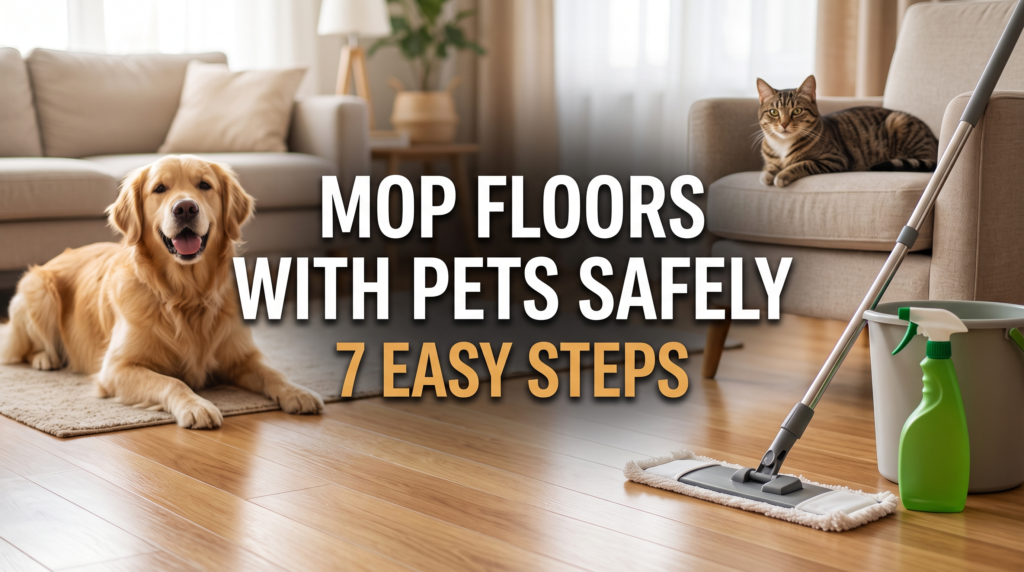
How to Mop Floors With Pets: Step by Step
Step 1: Vacuum or sweep first
Pet hair, dander and dirt must come off before water touches the floor. Vacuum first, then mop, as we explain in should you vacuum or mop first. Our guide on the best budget vacuum for pet hair can help you choose a machine.
Step 2: Move pets to another room
Keep dogs and cats out of the area while you clean, and until it has fully dried. A closed door or a baby gate does the job.
Step 3: Choose a safe solution
Use plain warm water or a pet safe cleaner at the strength on the label. Do not add extra product, since leftovers stay on the floor and on paws.
Step 4: Keep the mop damp, not wet
A damp flat microfiber mop uses less liquid and dries faster. Wet floors take longer to dry and stay slippery for pets, especially older dogs.
Step 5: Mop in sections, with the grain
Work in small areas and change the pad when it looks dirty. A dirty pad spreads hair and grime. Our guide on how to clean a mop head shows how to wash pads properly.
Step 6: Rinse with plain water
If you used a cleaner, go over the floor once more with a damp pad and plain water to remove residue. Leftover cleaner can feel sticky, and pets lick their paws afterward. See why a floor feels sticky after mopping for more.
Step 7: Dry the floor and keep pets out until it is dry
Dry with a clean microfiber cloth or open a window. A veterinarian quoted by AOL advises keeping pets away from cleaned areas until they are completely dry. Not sure how long that takes? Read how long a floor takes to dry after mopping.
I learned the value of that last step after mopping my sister’s kitchen while her young dog waited by the door. The second I stepped away, he trotted across the damp tiles, slid, and then licked his paws. We switched to plain water plus a quick towel dry, and used a gate until the floor was dry. It took five more minutes and removed the worry.
How to Clean Pet Accidents on Hard Floors
- Wear gloves and pick up solid waste with paper towels.
- Blot liquid instead of rubbing it.
- Apply a pet safe enzyme cleaner and let it sit for the time on the label.
- Wipe with a damp cloth and dry the area.
- Mop the area with your usual damp mop if needed.
- Check later to make sure no smell remains, since pets return to places that still smell like urine.
Do not use ammonia based products on urine stains. Ammonia smells like urine to animals and can encourage repeat accidents.
Muddy Paws and Wet Weather
- Keep a towel and a shallow tray of water near the door to wipe paws.
- Place a washable mat inside and outside the entrance.
- Let mud dry, then vacuum it up before mopping, as long as it is not tracked everywhere.
- Mop the entryway more often than the rest of the house.
The Best Mop for Homes With Pets
A flat microfiber mop is the best all rounder. It picks up hair and dander, uses little water and has washable pads you can swap. A spray mop is good for quick touch ups. Steam mops use heat instead of chemicals, which sounds ideal for pet homes, but heat and moisture can harm some floors, so check your manufacturer first. For wood, see can you use a steam mop on hardwood floors.
Wash pads after every use, because a pad full of pet hair and dirt can smell, as we describe in why your mop smells bad.
Floor Specific Tips for Pet Homes
Hardwood: Use very little water and wipe up accidents quickly. Read how to mop hardwood floors safely.
Laminate: Moisture is the main enemy. Our guide on how to mop laminate floors without streaks shows how.
Tile and vinyl: Easier to clean, but grout traps odors, so give it extra attention.
Kitchen floors: Pet food and water bowls cause drips and sticky spots. See how to fix sticky kitchen floors.
How Often Should You Mop With Pets?
Most pet homes do well with a damp mop once or twice a week, plus quick wipes after accidents or muddy days. Daily vacuuming or sweeping handles most of the hair. Our guide on how often you should mop floors covers other situations. If you have fleas, take a look at our article on a vacuum cleaner for fleas.
If Your Pet Licks or Swallows a Cleaner
Stay calm and act quickly:
- Take the pet away from the product and the floor.
- Check the label and note the ingredients.
- Call your vet or a local animal poison helpline straight away.
- Follow their instructions and do not induce vomiting unless a professional tells you to.
The ASPCA Animal Poison Control Center is a US service reachable on 888-426-4435, and its page lists the details (ASPCA). If you live outside the US, contact your local vet or emergency animal clinic.
Common Mistakes to Avoid
- Using pine scented or phenol cleaners. They can be toxic, especially to cats.
- Mixing bleach with vinegar or ammonia. It creates a dangerous gas.
- Using too much product. Residue stays on the floor and paws.
- Letting pets walk on damp floors. They may lick residue and can slip.
- Skipping the vacuum. Wet hair clumps are harder to remove.
- Using essential oils without checking. Many are toxic to pets.
- Ignoring the smell after accidents. Pets return to the same spot.
Quick Checklist
- Vacuum or sweep first
- Move pets out of the room
- Use plain water or a pet safe cleaner
- Keep the mop damp, not wet
- Rinse residue with plain water
- Dry the floor and wait before letting pets back
- Use an enzyme cleaner for accidents
- Store cleaners where pets cannot reach them
FAQ
How long should pets stay off a mopped floor?
Until it is completely dry, which can take a few minutes to much longer depending on the floor and ventilation.
Is it safe to mop floors with pets in the house?
Yes, with pet safe products and good habits. Keep pets out of the room until the floor is completely dry.
What can I mop with if I have a dog or cat?
Plain warm water, a pet safe fragrance free cleaner, or a floor safe diluted vinegar solution if your manufacturer allows it.
Is vinegar safe for pets?
Diluted vinegar is generally considered gentler than many chemical cleaners, but check your flooring manufacturer’s advice first, since it can harm some floors.
Can I use bleach on floors with pets?
Avoid it where possible. If you use it, dilute it correctly, ventilate, rinse thoroughly and keep pets away until dry. Never mix it with other cleaners.
How do I remove pet urine smell from a floor?
Blot, then use a pet safe enzyme cleaner and let it dry. Avoid ammonia based products.
Are steam mops safe for pets?
Steam avoids chemical residue, but it can damage some floors, so follow your manufacturer’s rules.
Final Thoughts
A clean floor and a safe pet can go together. Vacuum first, choose simple pet safe products, keep the mop damp, rinse away residue and wait until the floor is dry before pets walk on it. Do that and your home will stay fresh without any worry. For more help, browse our mops category or read our guide on how to mop floors without leaving streaks.